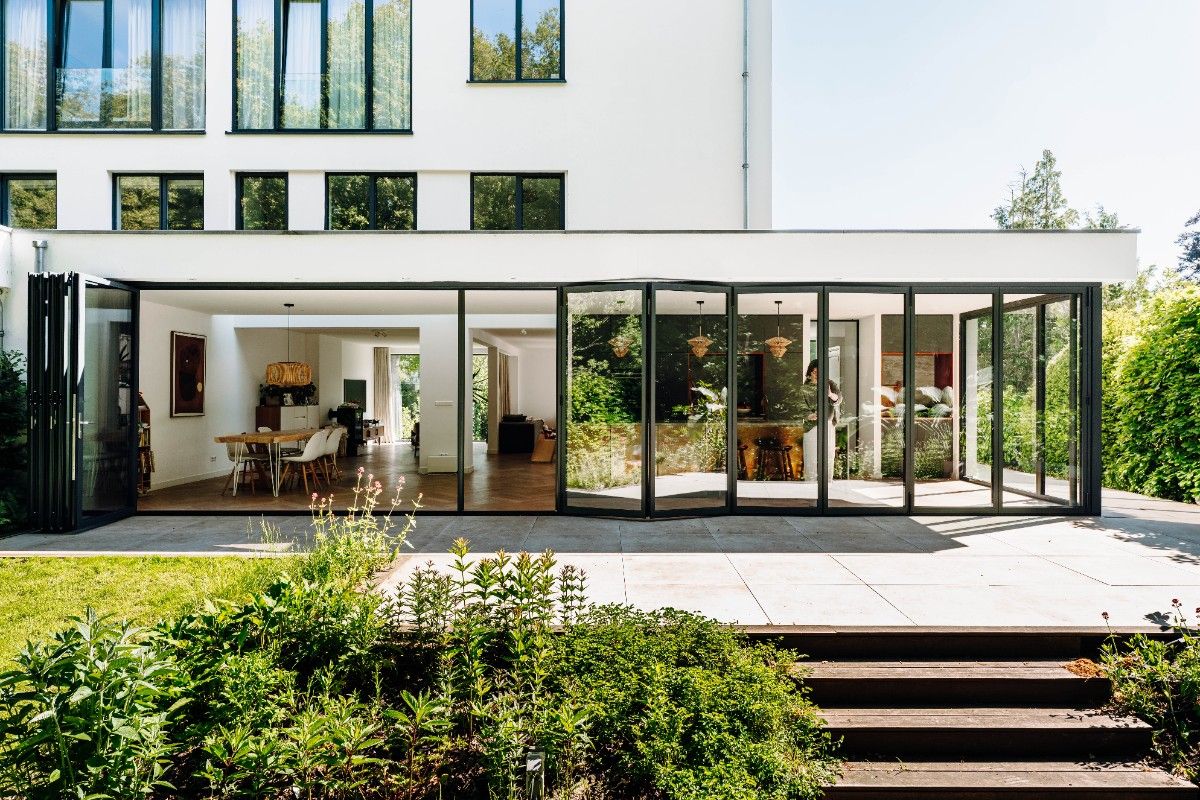
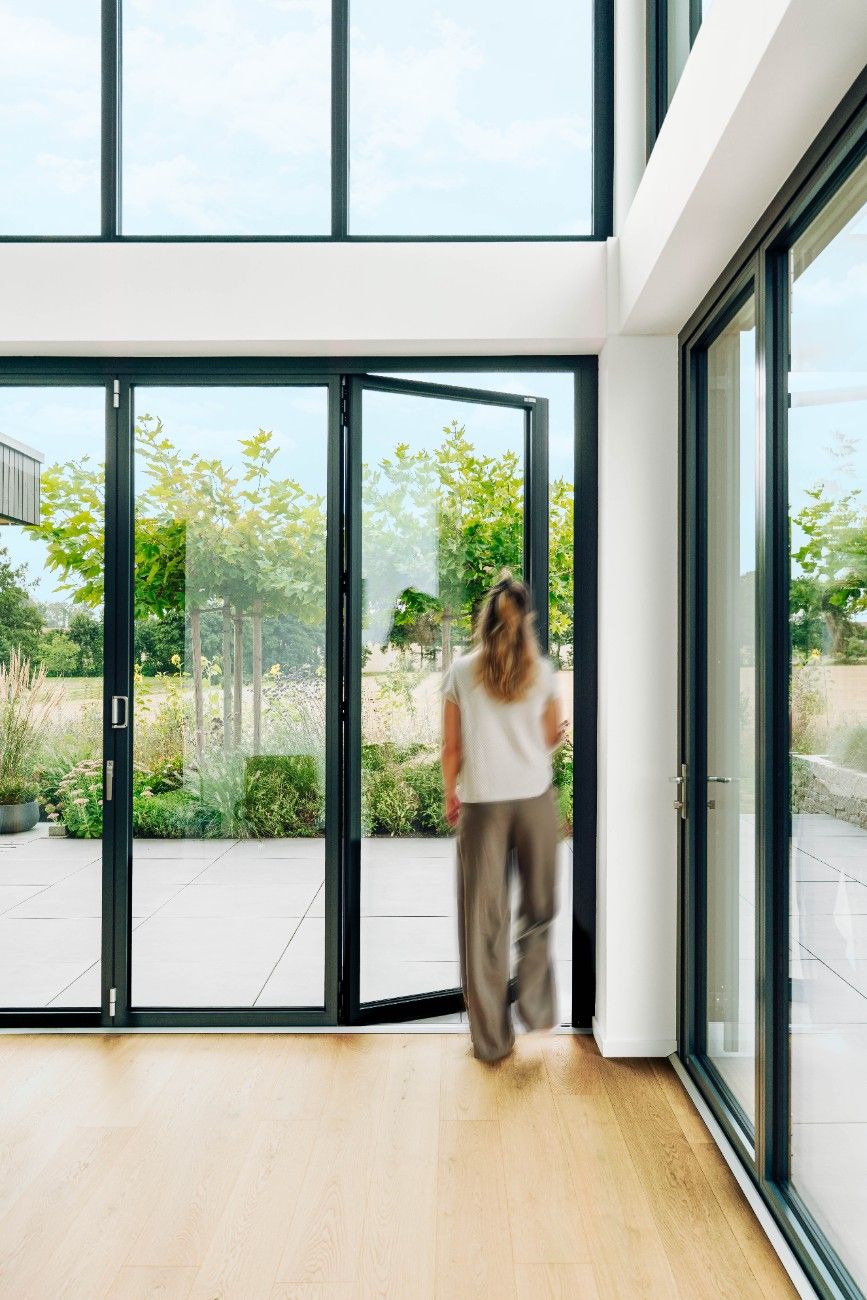
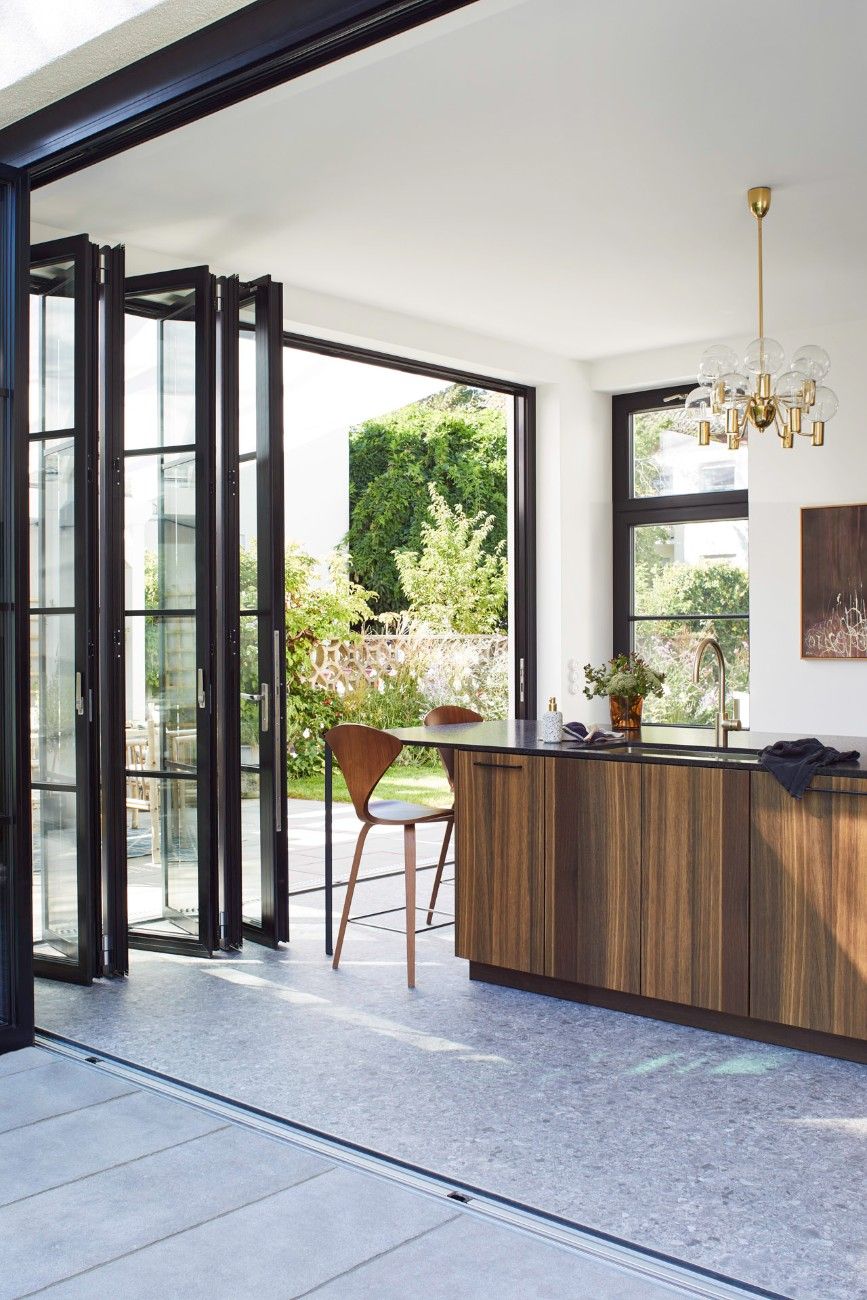
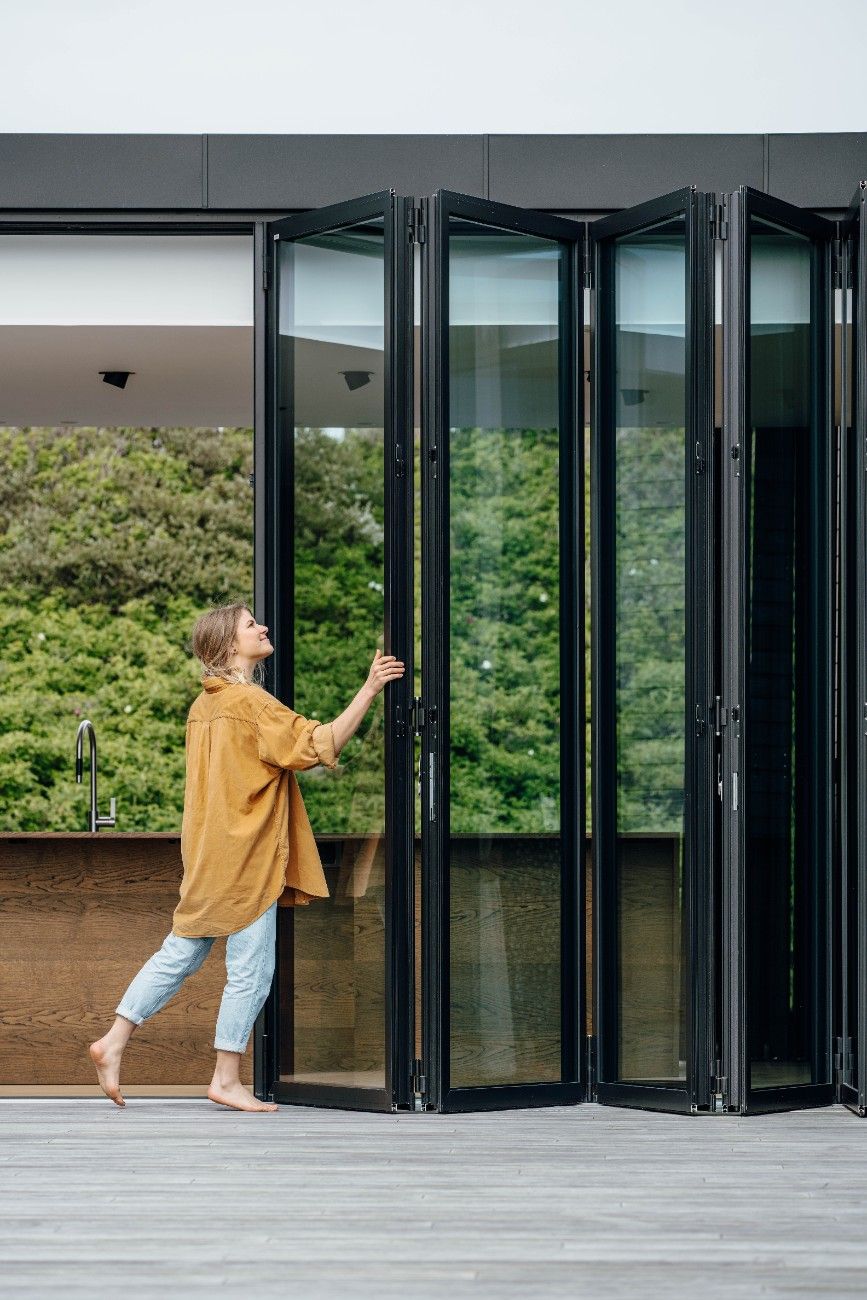
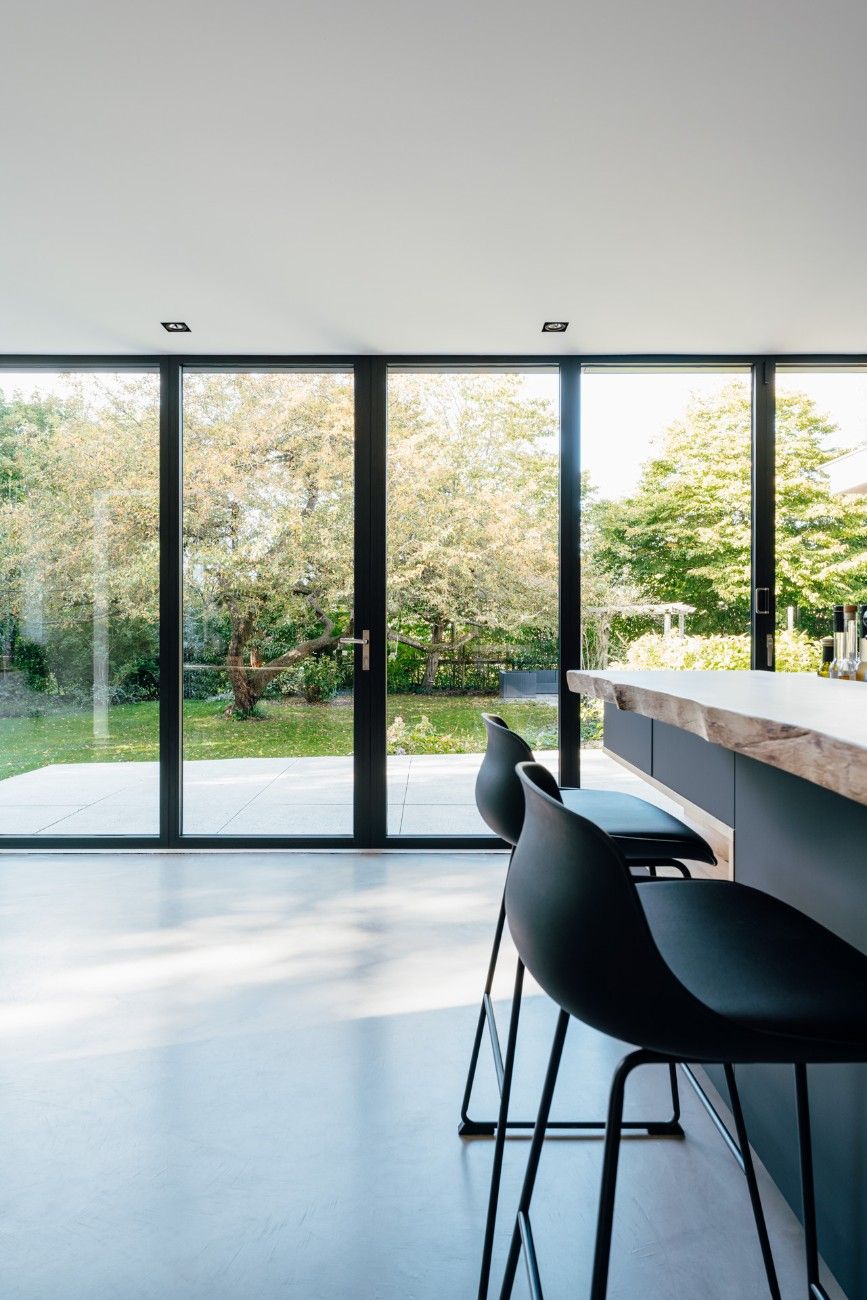
Bifold doors are typically used to enclose wide openings that look out over a garden or the natural landscape. Homeowners want a clear view outside – to stand in their home and enjoy a sweeping panorama, even when the bifold doors are closed. This creates a challenge for designers. As glazing spans become larger, they require more support, which would typically mean thicker frames – exactly what homeowners don’t want.
This is where precision engineering and the design of bifold doors come together. With tight tolerances of less than a millimetre in frame fabrication and alignment, as well as panel consistency and hardware integration, bifold doors can combine large spans of glass, minimal sightlines and high-end performance.
Because precision engineering means more effective support for the glazing, larger panels can be used within a system. While larger panels may require slightly larger frames, the overall result is a more expansive view.
Justin Spires, technical lead at Solarlux, explains that precision engineering has made it possible to create large bifold panels with minimal sightlines: “Solarlux Ecolineand Highline bifold doors offer sightlines of only 99mm at the panel joint, with panels of up to 3.5m high and 1.1m across. For even larger spans of glass, our Megaline bifold door panels can be up to 4.5m high and 1.5m wide, with sightlines of just 129mm possible at the panel joint.”
He adds that the full effect of precision-engineered bifold doors is when multiple bifold panels are used together: “With several bifold doors together in a bespoke configuration, we can create incredibly large glass surfaces that look amazing, with minimal framing as well as excellent thermal performance and weather resistance. Precision engineering also means that our bifold doors are easy to operate, with smooth running even with large door panels, creating very wide, uninterrupted views of the outside when opened.”