Understanding large glass spans
Cero sliding doors maximum height

Understanding large glass spans: Innovation, engineering and performance in modern glazing

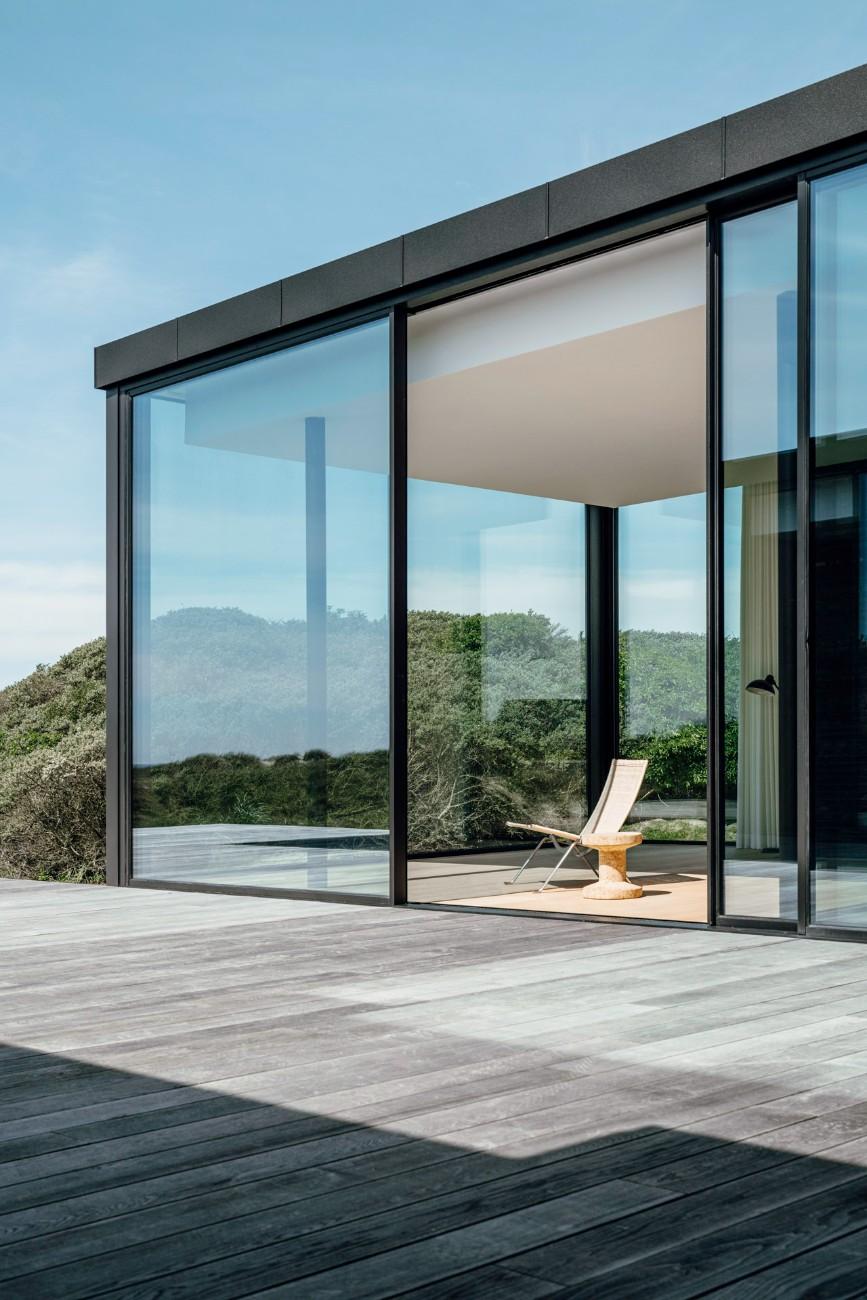
Natural light, panoramic outdoor views and impressive building aesthetics – large glass spans are a defining feature of contemporary architecture. Often measuring up to 15 square metres in surface area, large glass panels create uninterrupted connections between interior and exterior spaces. They deliver minimalist design with maximum visual impact, enhancing residential, commercial and public architecture.

Cero sliding door large span

The rise of large glass spans in architecture

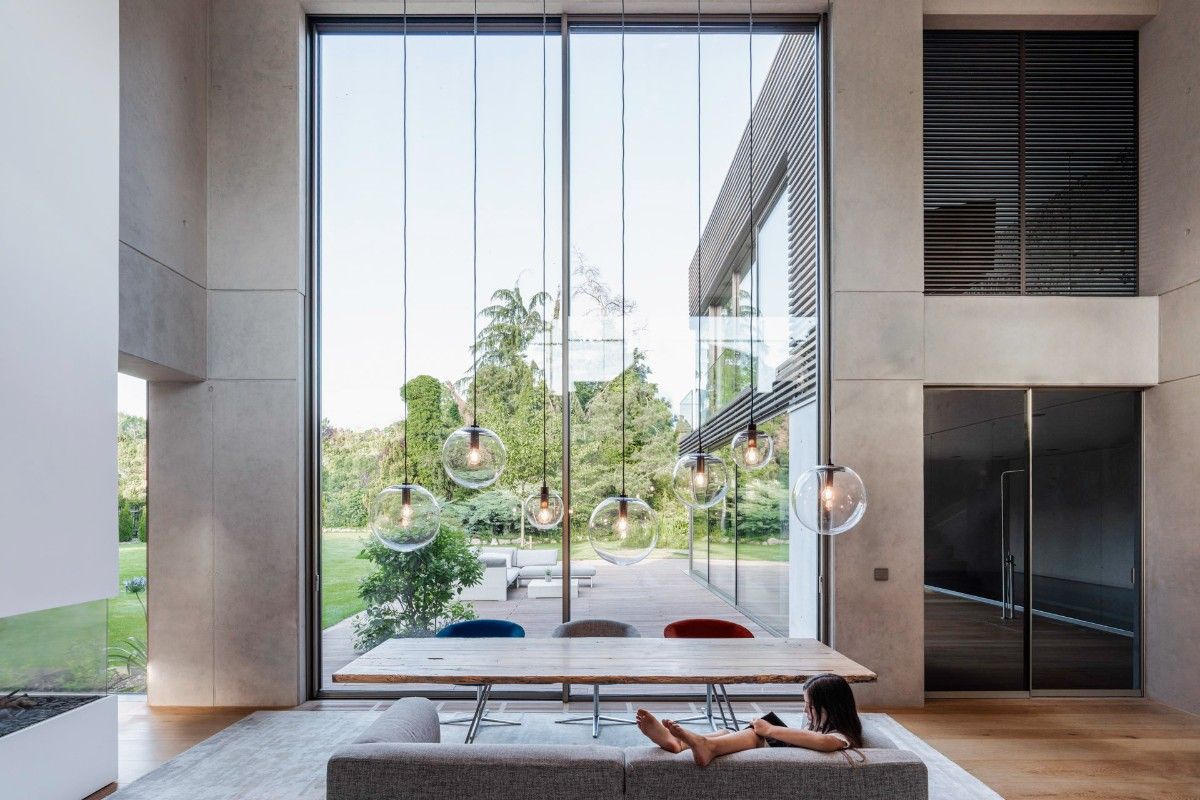
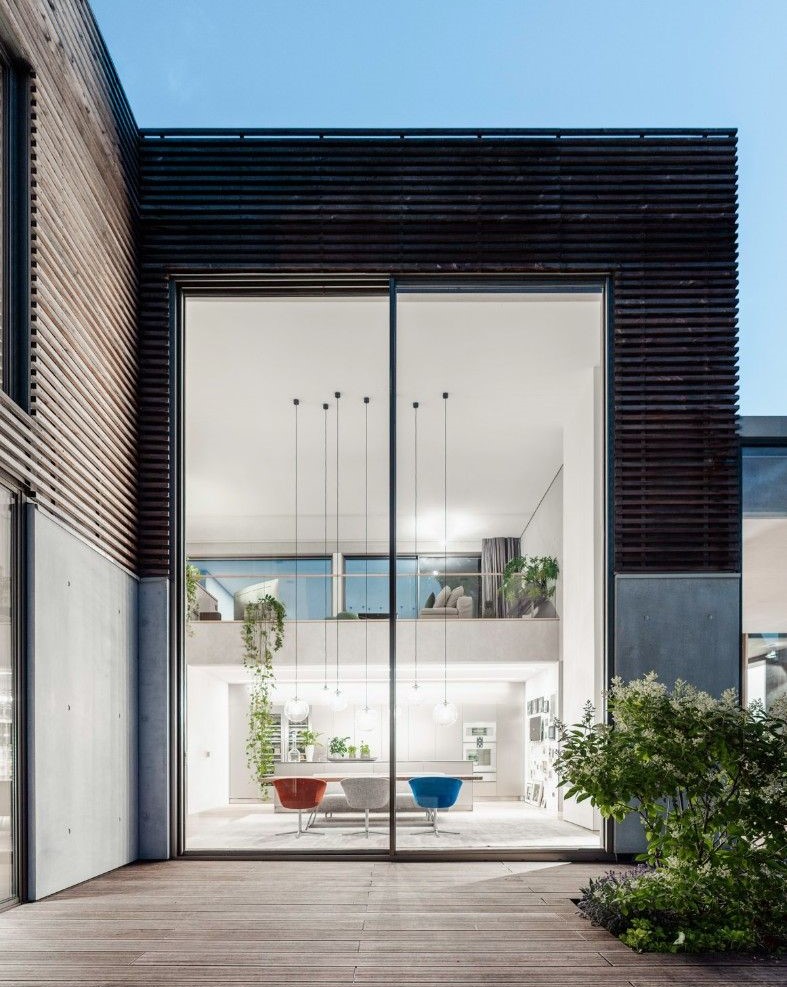
The desire for large spans of glazing is growing – and so is the size of the glass panels that are being specified. Designers have long used glass to create impressive facades and, as glass manufacturing, frame engineering and installation processes have evolved, large spans have become feasible for more projects. Panels up to 6m high or 4m wide are now often specified for premium residential and commercial applications. These allow for less visible framing, more natural light and a cleaner aesthetic.

Some glazing manufacturers can produce glass panels that measure up to 20m in length and 3m high – meaning that there is potential for even larger glass spans. However, as the sheets of glass become larger, so do the practical and structural challenges they present. This means that anything larger than about 15 square metres in surface area is extremely rare.

Overcoming the challenges of large glass spans

Although oversized glass panels are increasingly popular, they still pose several challenges that must be carefully considered and planned for. Solarlux technical lead Justin Spires explains some of these difficulties and how they can be overcome with suitable planning and specification.

Structural loading

“Large glass spans are extremely heavy, weighing up to a ton or more, depending on the glass's size and thickness,” Justin explains. “This weight must be considered in the early planning stages of the surrounding building structure,” he adds.

Wind loading

“The larger a glass span is, the more wind will hit its surface at any given time. This means more potential for deflection,” Justin warns.

“At the design stage, careful orientation of the building can play a crucial role in mitigating wind loading on large spans of glass. Minimising the glazing’s exposure to prevailing winds can significantly reduce lateral pressure and deflection.

“In terms of the glass itself, thicker glass can be used to reduce deflection, while specialist treatments such as lamination, tempering and pre-stressing can strengthen the glass panel,” he says.

He also notes that the frame of the glazing system is critical for preventing deflection and supporting the glass, even in high winds. “Depending on the project requirements, larger glass spans may require wider profiles to provide adequate support. Solarlux systems can also include steel reinforcement within the vertical profiles for added strength, the steel elements are completely hidden within aluminium profiles and do affect the thermal performance of the system.” he says.
Transport and handling

Justin explains that large glass panels are exceptionally heavy and they must be handled with extreme care. Precision is critical to prevent stress, vibration or flexing during transport and installation, which could compromise the integrity of the glass. “Each panel is meticulously prepared and transported upright to preserve dimensional integrity and surface quality. Once on site, they are moved into position using specialist equipment such as vacuum lifters, cranes and automated handling systems,” he explains.

Technological advances enabling larger glass spans

As demand for large glazing panels has grown, manufacturers have developed advanced materials and engineering techniques to deliver exceptional performance and precision.

Cero sliding doors large span high strength

The evolution of high-strength glass

Modern high-performance glazing often comprises multiple layers that are laminated together to provide strength, durability and safety. Polyvinyl butyral (PVB) is the most widely used interlayer material. It provides impact resistance, acoustic damping and UV filtering. However, it does not provide sufficient stiffness to control deflection in larger glass spans.

Ionoplast is a high-performance polymer that is tougher and stiffer than PVB. It is increasingly being used as an interlayer material, especially for large-scale glass panels. Ionoplast gives the glass greater rigidity and edge stability, allowing thinner panels to withstand higher wind loads. It also offers higher light transmittance and better clarity than PVB.

Other long-established manufacturing processes, such as heat strengthening, tempering and pre-stressing, have also evolved in recent years. These advances deliver improved precision and quality control, enhancing the glass’s load-bearing capacity and resistance to breakage.

Slimline framing systems and structural support innovations

While advances in glass manufacturing have provided the strength needed for larger spans, the framing systems that support them have also progressed.

Solarlux’s precision-engineered aluminium frame systems can be reinforced with steel inserts to provide strength and rigidity. This allows large glass spans to be supported while maintaining a slim, minimalist aesthetic.

Our glazing systems are tailored to each project’s specific requirements. This allows architects to specify very large glass spans, while ensuring that performance criteria – including structural integrity, wind resistance and thermal efficiency – are fully met.

Other glazing design considerations when specifying large glass spans

  • Thermal performance – Approved Document L (England) sets maximum U-values for building elements, including walls, windows and doors. While large glass spans increase the potential for heat loss compared with walls, features such as low-E coatings and double- or triple-glazing ensure the glass itself remains thermally efficient. Instead, the frame is usually the primary source of heat loss in these systems. To optimise energy performance, structural glazing frames should be thermally broken and designed to avoid thermal bridging.
  • Air and water tightness – Large glass spans should be suitably sealed against air and water infiltration. Solarlux systems have integrated drainage to direct excess water away.
  • Acoustic insulation – Laminated glass can include interlayers that reduce external noise, while double- and triple-glazing also provides sound damping.
  • Solar gain and shading – Large spans of glass increase the potential for summer solar heat gain, raising the risk of overheating. Approved Document O (England) requires that unwanted solar gains be limited. The right method will depend on the project, its location and design, but options include building orientation, shading systems and solar-control coatings on the glass.

Testing and certification of large glass spans

Ensuring that large-format glazing performs safely and reliably requires rigorous testing.

Testing verifies structural integrity, wind and weather resistance, impact performance and long-term durability. It provides confidence that the glass will meet both regulatory and project-specific requirements. It can also support building or manufacturer warranties by demonstrating compliance with industry standards.

Several industry standards apply to large spans of glazing, describing expected performance characteristics, providing classification systems or describing testing procedures. For example:

  • BS EN 12150-1:2015 is the standard for thermally toughened soda lime silicate safety glass used in buildings. It sets requirements for strength, safety and how the glass breaks, ensuring it shatters into small, relatively harmless pieces rather than large shards.
  • BS EN 12207:2016 and BS EN 12208:2000 are European standards that provide classification systems for the air permeability and watertightness of windows and doors, respectively.
  • BS EN 12600 is a European standard for classifying the impact resistance of safety glass. Testing is carried out by dropping a weight from different heights.

The Centre for Window and Cladding Technology (CWCT) has also set standard test methods for building envelopes. The test results describe how well a glazing system performs under severe weather conditions and impact.

Solarlux glazing systems are independently tested to applicable BS EN standards, giving specifiers confidence in the product’s safety, performance and longevity.

Large glass spans biddenham

Using large glass spans in modern architectural design

Large spans of glass can transform a building’s appearance, framing views and blurring the boundary between interior and exterior. This was demonstrated at a self-build project in Biddenham. With property overlooking the River Great Ouse, the client wanted to enjoy panoramic views from inside, but the strong local winds posed a challenge. Solarlux Cero III sliding glass doors were chosen, offering expansive views, minimal sightlines and robust weather resistance.

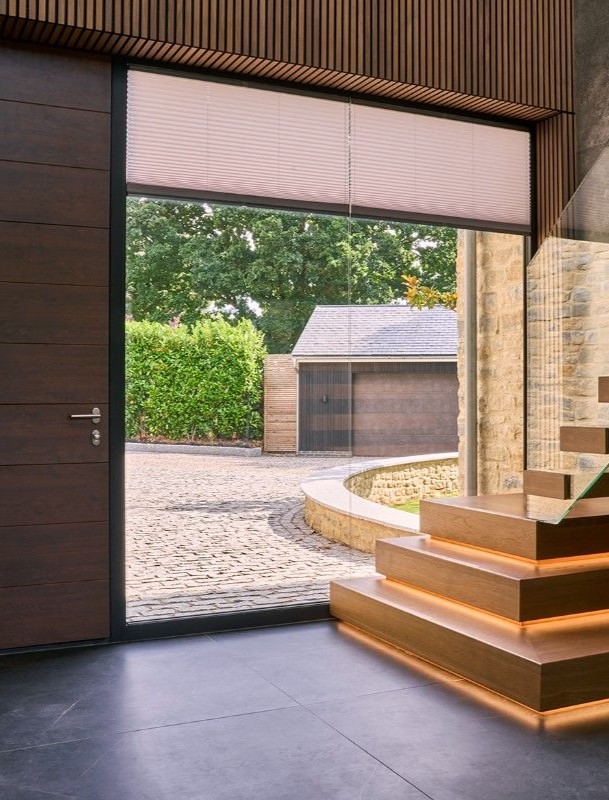
Solarlux also worked with the client to provide an extensive glass panel for the home’s entry. Measuring over 2m tall, the fixed glass panel complements the porcelain front door and maintains the home’s clean architectural lines.

Jeevan Matharu, Marketing Manager at Solarlux, explains: “The original door manufacturer was unable to provide a fixed glass panel large enough to complement the door’s height. Solarlux worked with Spectrum Architectural Glazing to create a bespoke fixed glass panel that created a perfectly proportioned entrance, while maintaining the clean architectural lines of the facade.” The large glass span was also engineered and tested to withstand the local weather conditions. “The result was an impressive entrance that used large spans of glass, so the client didn’t have to compromise on design intent,” Jeevan adds.

Solarlux: shaping the next generation of architectural glazing

The performance of large glass spans has come a long way, enabling the design, specification and installation of monolithic glazing structures that would once have been considered impractical or impossible. At Solarlux, we continue to develop innovative products and methods that push the boundaries of modern glazing technology and define the next generation of glass systems.

To learn more about Solarlux glazing solutions, browse our product pages or contact our team for expert technical advice and specification support.

Get in touch
To learn more, you can explore our range of verandas and glass canopies. Or contact a member of our team for expert guidance on your next project.