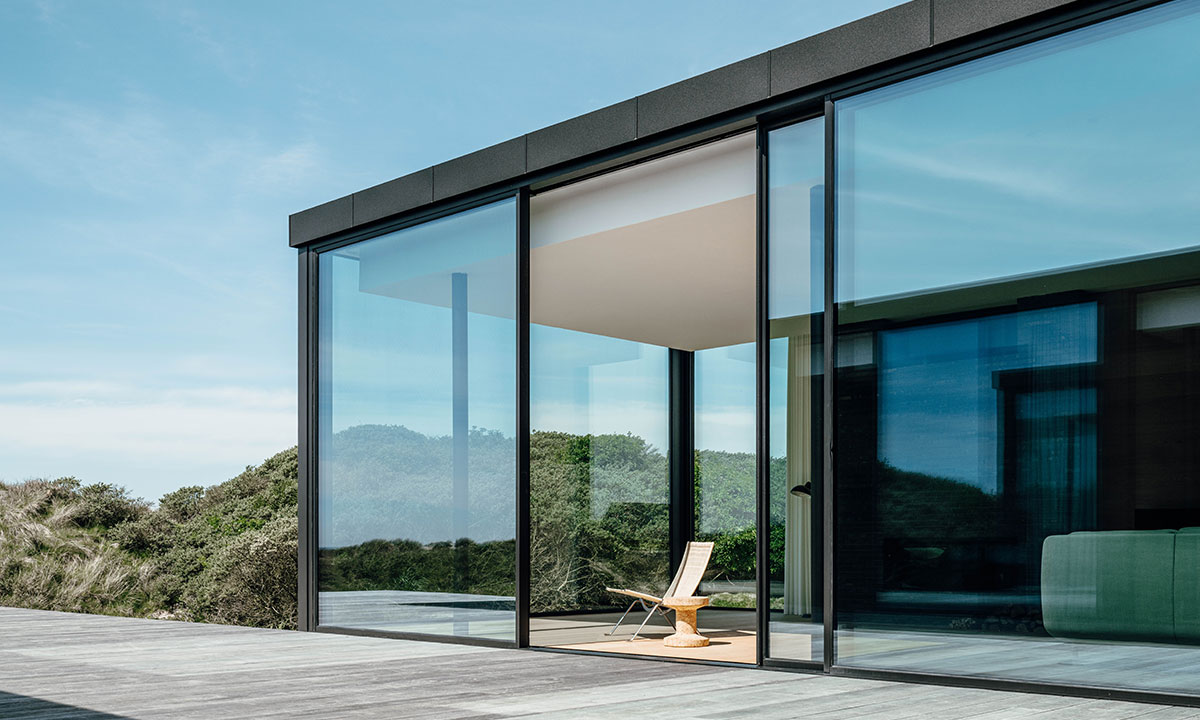
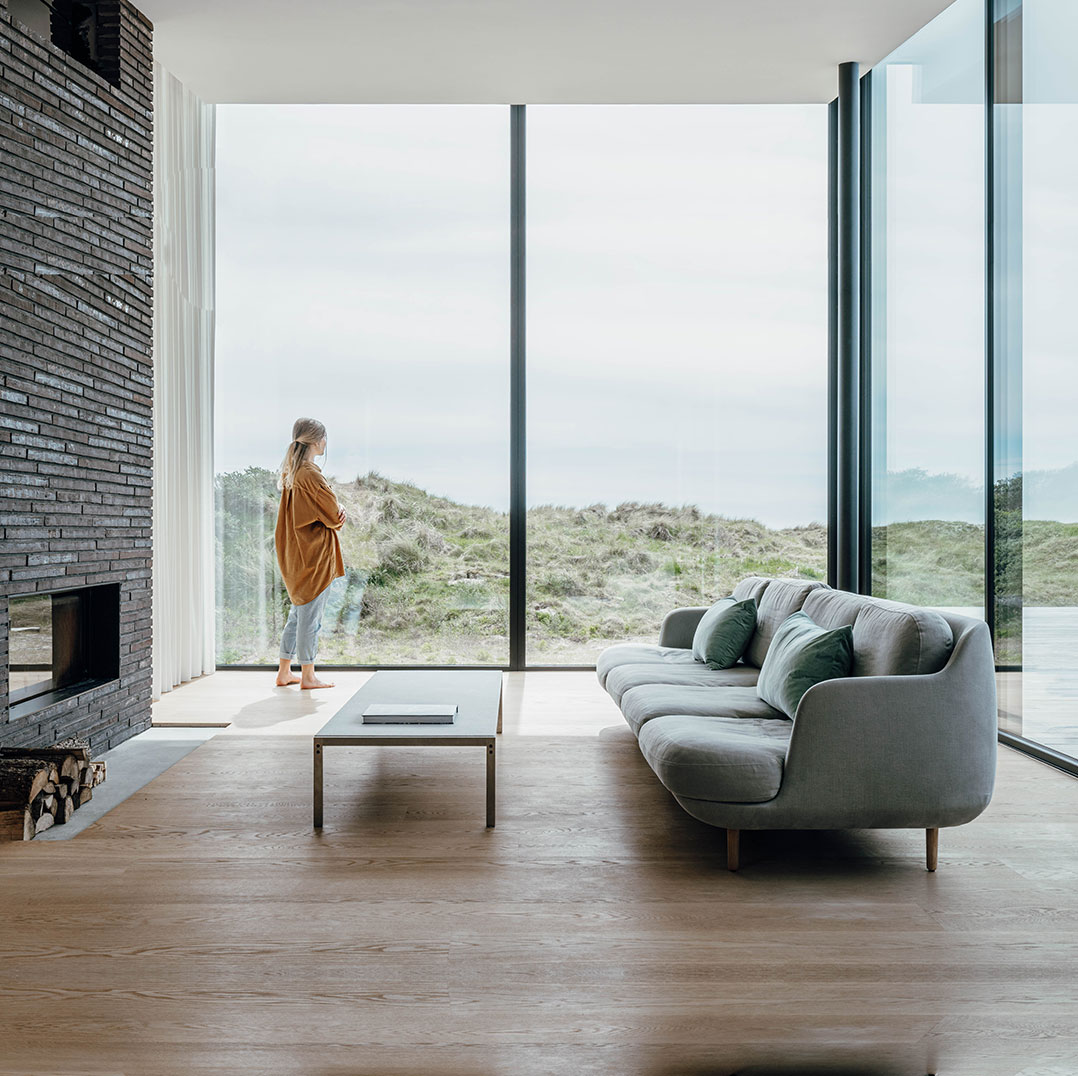
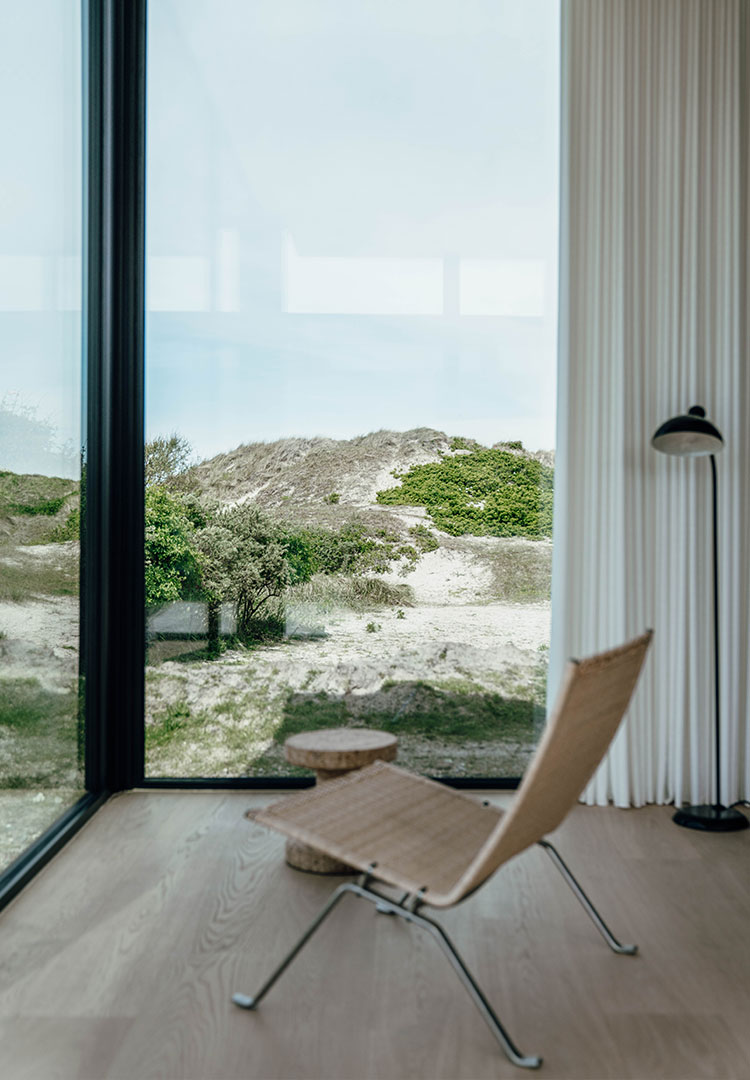
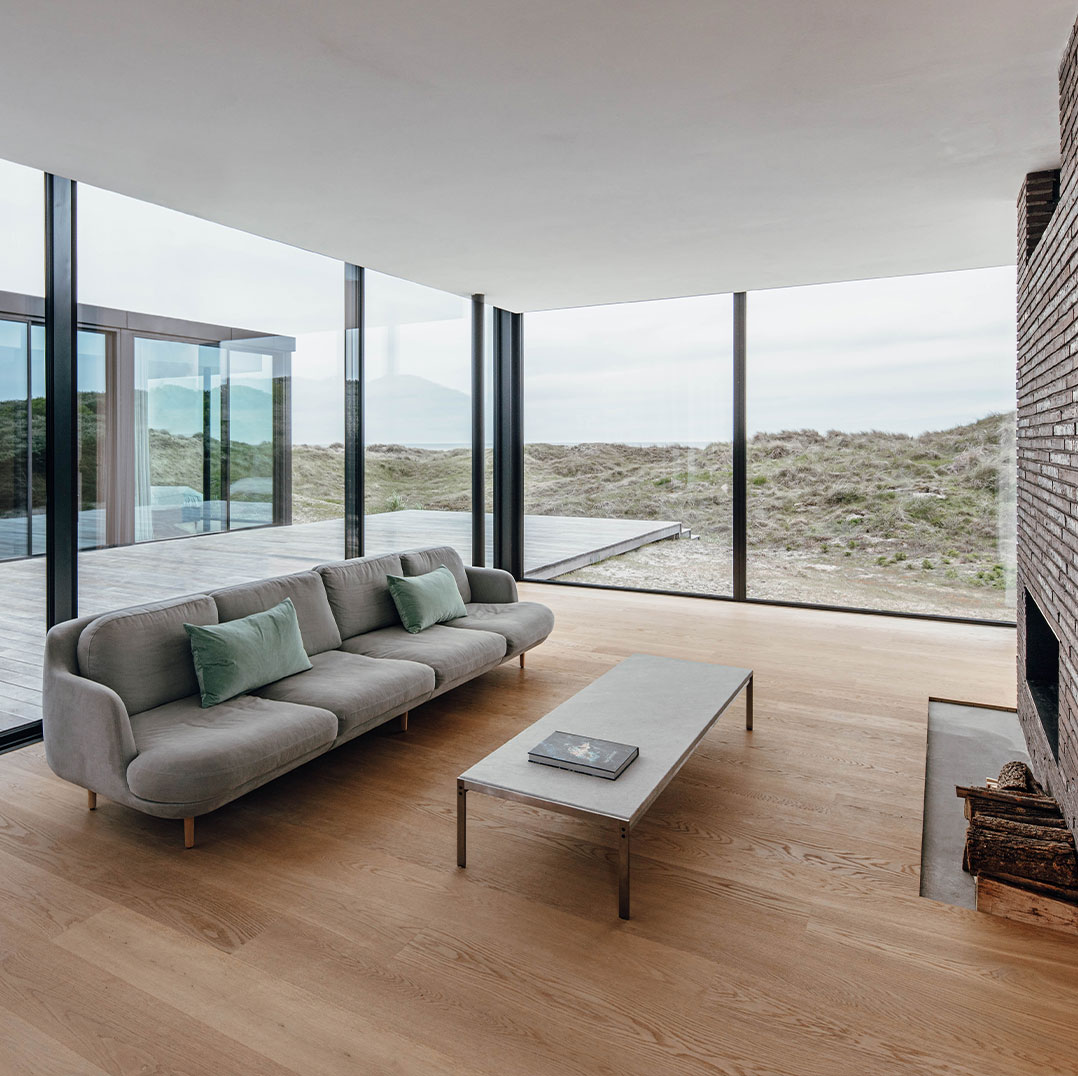
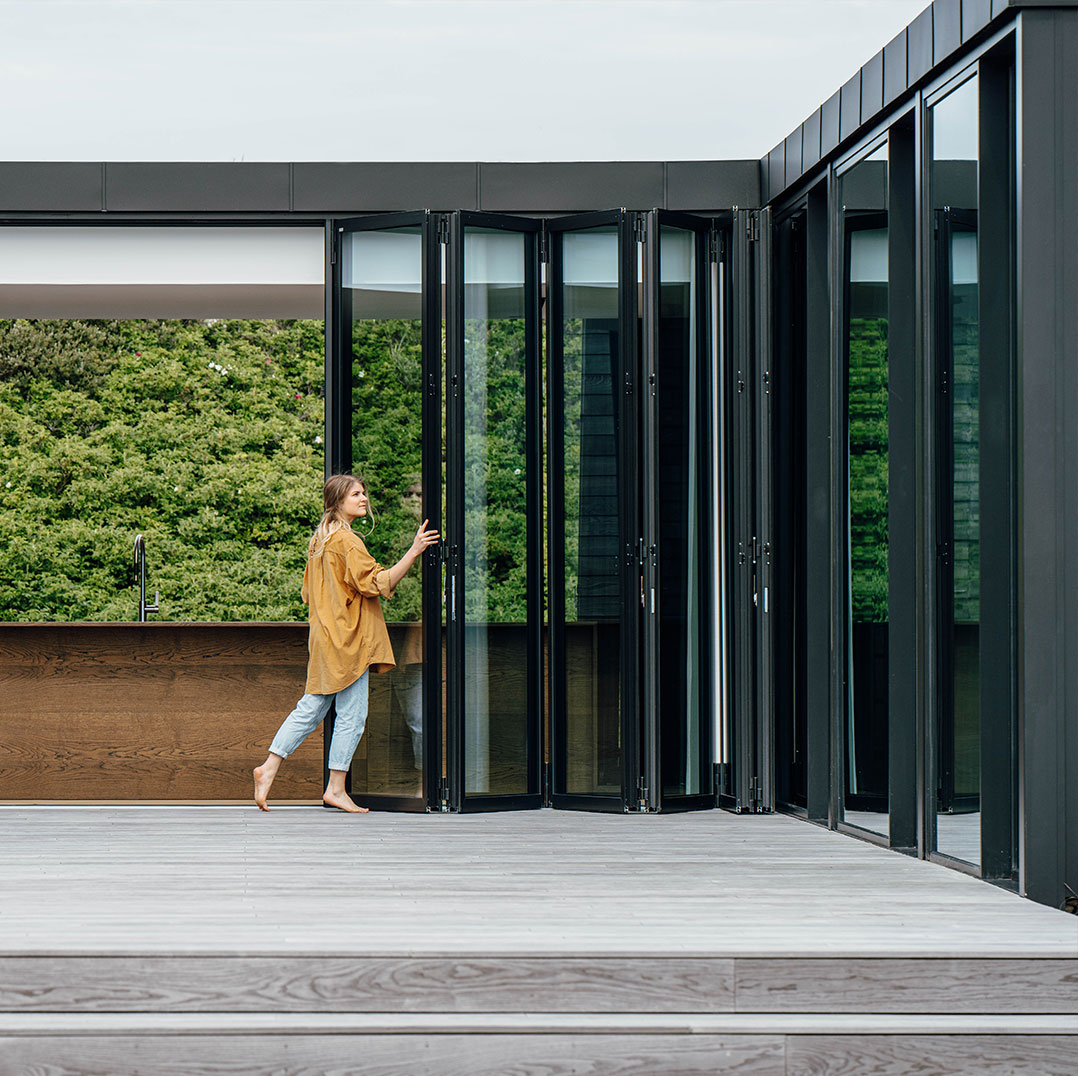
Corrosion resistance is one of the most important considerations when specifying glazing systems for coastal environments. Exposure to salt-laden air and moisture can accelerate corrosion, meaning material selection, protective finishes and hardware choices all affect long-term performance.
Aluminium is widely used for sliding doors and bifold doors because it combines strength, stability and resistance to corrosion. In coastal locations, however, even aluminium may require specialist treatment to prevent deterioration.
“For exposed coastal locations, we recommend pre-anodisation combined with high weather-finish (HWF) powder coatings,” Justin says.
“Pre-anodising creates a protective oxide layer on the aluminium, which improves corrosion resistance,” he explains.
The HWF powder coating is then applied. “Compared with standard architectural finishes, HWF provides improved resistance to UV degradation and weathering. It also maintains its colour for longer,” he adds.
Hardware corrosion resistance should also be considered. Components such as handles, hinges and locking mechanisms are exposed to the same environmental conditions as the frame. Specifying corrosion-resistant materials, such as stainless steel, can therefore help maintain reliable operation over time.