Part K: Glazing safety for barriers, balustrades and facades
Balcony Glazing
Balcony Glazing
Balcony Glazing

Part K explained: What architects and specifiers need to know about safety in glazing and balustrades

From sliding doors and bifold panels to glazed extensions, balcony glazing, facades and garden canopies, glass can be used to create beautiful features that elevate a home’s aesthetics and the lifestyle of occupants. When designing and specifying glazed elements, safety is a critical consideration. Part K of the Building Regulations covers glazing safety and sets minimum standards to protect people from falls, impact and injuries.

Part K is critical in locations where glass is used at low level, such as in doors, walls and balustrades. For architects and specifiers, understanding where the rules apply and how to integrate compliant products into a design is essential. The right approach helps ensure that glazing delivers the desired architectural effect and also meets the performance expectations of building control and the end user.


What is Part K? Overview and scope

Part K of the Building Regulations 2010 covers protection from falling, collision and impact. It covers key areas including stairs, ramps, balconies, windows, barriers and other glazing elements.

It applies to all new buildings in England – both dwellings and other types of buildings – as well as to those undergoing a material change of use or certain extension and refurbishment projects, particularly those that involve the addition of new glazed elements. Guidance for achieving the standards is provided in Approved Document K. Similar requirements apply to other parts of the UK, and the relevant documents are:

  • Wales: Approved Document K (Wales) – Protection from falling, collision and impact
  • Scotland: Building standards technical handbook, section 4 – Safety
  • Northern Ireland: Technical Booklet H –  Stairs, ramps, guarding and protection from impact

Part K is split into six parts:

  • K1: Stairs, ladders and ramps – Sets out minimum design standards with an aim to reduce slips, trips and falls. It includes recommended dimensions, tread depth, riser height, pitch and handrail locations.
  • K2: Protection from falling – Provides guidance when a floor edge, landing, roof terrace or balcony is above a certain height. It requires barriers to prevent falls and sets out height, strength and positioning requirements for guardrails and balustrades.
  • K3: Vehicle barriers and loading bays –Sets out barrier requirements for spaces in commercial and industrial buildings where vehicles move close to pedestrians.
  • K4: Protection against impact with glazing – Requires the use of toughened or laminated safety glass and glass manifestation markings in specific zones to reduce the risk of impact with large glass panels.
  • K5 Additional provisions for glazing in buildings other than dwellings – Sets out additional requirements for impact resistance of doors, screens and partitions in schools, hospitals and other non-residential settings.
  • K6: Protection against impact from and trapping by doors – Requires safety systems, including sensors, safety edges and fail safes, for doors and gates that have powered operation.

Understanding these requirements can help to reduce the risk of accidents and injuries while also supporting wider accessibility and usability objectives, making buildings safer and more comfortable for everyone.
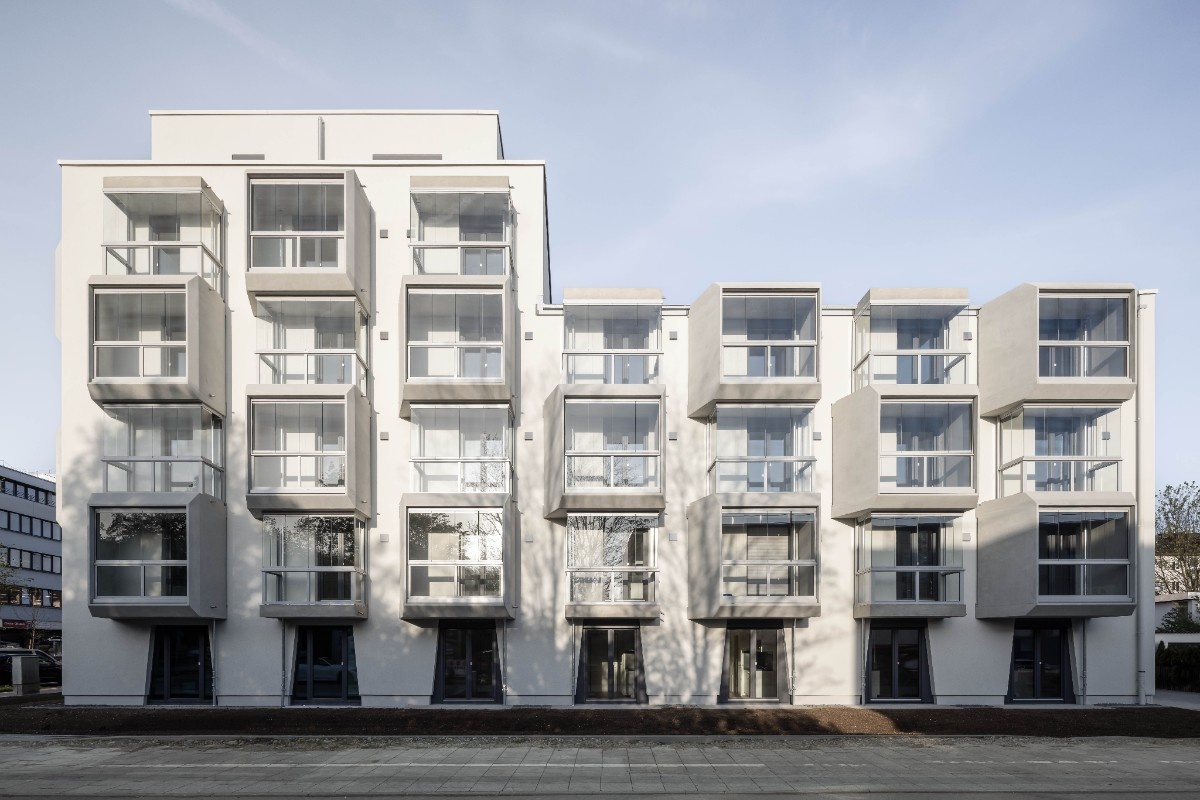
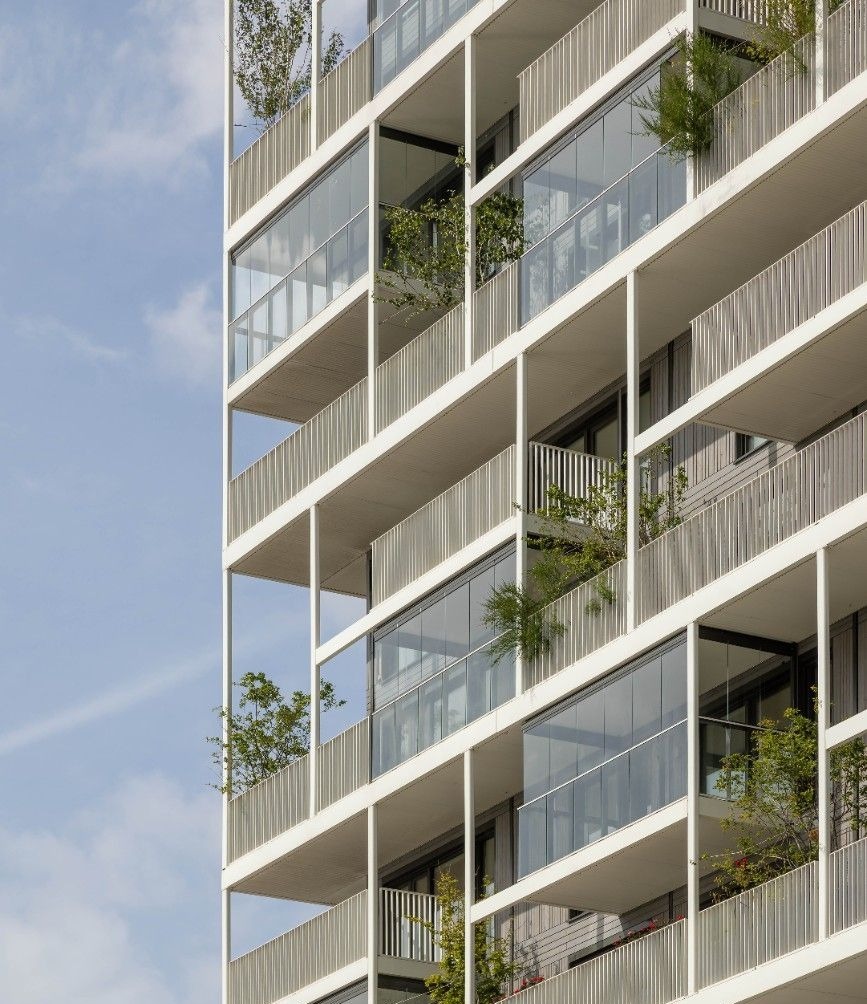
Balcony glazing balustrades

Safety glass requirements and Part K: What you need to know

Part K sets out requirements for glazing to protect building users from impact and injury. Safety glazing is required in areas where people are most at risk. It covers elements such as low-level windows, doors, side panels and other glazed elements in critical locations, including:

  • Internal walkways, such as corridors, lobbies, atria and stair landings
  • Balconies and roof terraces
  • Routes forming part of a means of escape in case of fire
  • External pedestrian access and circulation routes to buildings

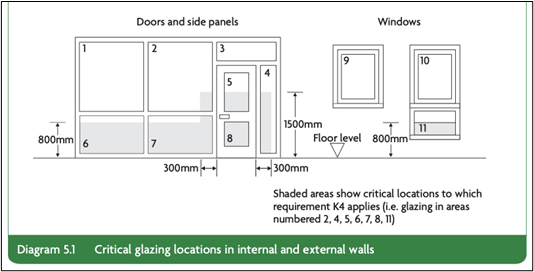
In dwellings, the height threshold and impact zone cover areas less than 800mm above floor level in these critical locations. For areas in and around doors, the threshold increases to 1500mm. Justin Spires, technical lead at Solarlux, notes that specifying appropriate glazing for these locations helps to reduce the risk of injury and ensures compliance with Part K. “To meet the standards, glazing must either withstand impact (either by being suitably robust or installed in small panes) or, if it breaks, produce fragments that minimise the risk of injury,” he explains.


Toughened or laminated glass is commonly specified, and all products should be tested in accordance with recognised standards such as BS EN 12600:2002 – Glass in building, pendulum test. This standard defines the testing method for impact resistance of flat glass. It uses a weighted pendulum to simulate an impact and classify glass based on its behaviour when struck.

Safe breakage is defined in BS EN 12600 section 4 and BS 6206 clause 5.3. In an impact test, a breakage is considered safe if it creates one of the following:

  • A small clear opening only, with detached particles no longer than the specified maximum size.
  • Disintegration with small, detached particles
  • Broken glazing in separate pieces that are not sharp or pointed

Where safety glazing is not practical, alternative measures, such as protective screens, balustrades or other guarding, may be used. Large glazing panels should also feature appropriate manifestation markings to ensure visibility and reduce the risk of accidental collisions.

Critical glazing locations

Part K: Balustrade regulations, barriers and fall protection

Part K sets out requirements for guarding to prevent falls from height and to protect building users from injury. Guarding is required wherever there is a risk of falling, including staircases, landings, balconies, roof terraces, raised platforms, and internal voids.

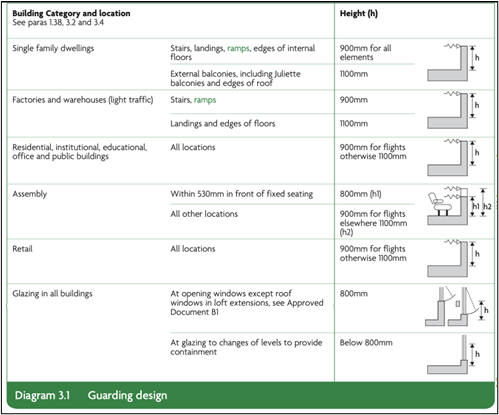
Approved Document K includes guarding height regulations. The minimum heights are typically:

  • Dwellings: 900 mm for internal stairs and landings, 1100 mm for balconies and roof terraces
  • Non-dwellings/public buildings: 1100 mm for stairs, landings and balconies
Guarding Design
Guarding Design

Justin also highlights that barriers must meet strength requirements to resist the minimum loads given in BS EN 1991-1-1 (Eurocode 1 – Actions on structures), together with UK National Annex and PD 6688-1-1. “These requirements help ensure that guardrails, glass panels and other forms of guarding can withstand expected loads and provide adequate containment,” he adds. Further guidance on the design of barriers and infill panels can be found in  BS 6180:2011, the code of practice for barriers in and about buildings.

Where glazing is used as part of a balustrade or barrier, it must:

  • Be toughened or laminated safety glass – Laminated glass can help maintain integrity after breakage because the interlayer retains the fragments, reducing the likelihood of a clear opening forming if the glass fails
  • Meet the required glazing impact safety requirements and load resistance standards of Part K and BS 6180.

Design considerations for compliance with Part K

“While most design briefs call for minimal sightlines and large glazing panels, these characteristics can make compliance with Part K more complex,” Justin warns. “Issues typically arise around barrier heights, the use of frameless glass and ensuring the specified fixing methods provide the required containment,” he says. “These challenges can typically be resolved, but it requires careful design, specification and appropriate testing,” he adds.

Building control will expect evidence that all guarding elements meet the relevant load, impact and durability requirements. Justin recommends early coordination between the architect, structural engineer and glazing manufacturer: “This can help ensure that aesthetic goals are achieved without compromising safety or regulatory compliance,” he says.

Product testing and evidence of compliance with Part K

Part K relies on verifiable performance, and documented test evidence is essential. Third-party testing to standards such as BS EN 12600 and BS 6180 provides assurance that glazing and barrier systems meet the necessary impact and load resistance criteria.

When specifying glazing and barrier systems, product documentation should include evidence of impact testing, structural performance data and details of any limitations or installation conditions that affect compliance. The documentation will also serve as evidence when submitting to building control for final approval.

Part K compliant glazing from Solarlux

Solarlux systems are engineered to meet the performance demands of modern architectural design, including applications where guarding, impact resistance and containment are required. Where appropriate, our glazed doors, balcony glazing, wintergardens, glass canopies and facades can be specified with tested safety glass, robust framing and barriers.

Our technical team can provide project-specific advice, test documentation and design guidance to help ensure the finished product is safe and compliant with Part K.

For more information about Solarlux glazing systems, contact our team for technical advice or specification support.

Get in touch
If you’re planning a glass extension or other glazed feature, explore the Solarlux range, including cero sliding doors, bifolding doors and wintergardens – or get in touch with our team for expert guidance.