Having an in-depth understanding of the various tests covered so far enables specifiers to determine precisely what performance requirements they should be requesting and allows manufacturers to select appropriate combinations of materials to meet those performance demands.
This is illustrated by the table below that shows how different combinations of glass thickness as well as the number and thickness of the laminated glass layers can achieve improved glazing ratings for laminated security rated glass.
| Glazing Rating |
Inner Glass Pane Type |
Glass Build-up |
No. of PVB Interlayers |
PVB Thickness |
Resistance Class: |
Testing Method |
No. of Drops |
Height of Drop (m) |
| - |
Standard glass |
- |
-
|
- |
RC1 |
- |
- |
3 |
| P1A |
Laminated |
6.8mm |
2 |
0.8mm |
PAS24 |
4.11kg sphere |
3 |
1.5 |
| P2A |
Laminated |
8.8mm |
2 |
0.8mm |
PAS24 |
4.11kg sphere |
3 |
3 |
| P3A |
Laminated |
9.2mm |
3 |
1.2mm |
PAS24 |
4.11kg sphere |
3 |
6 |
| P4A |
Laminated |
9.6mm |
4 |
1.6mm |
RC2/PAS24 |
4.11kg sphere |
3 |
9 |
| P5A |
Laminated |
10.4mm |
6 |
2.4mm |
RC3/PAS24 |
4.11kg sphere |
9 |
9 |
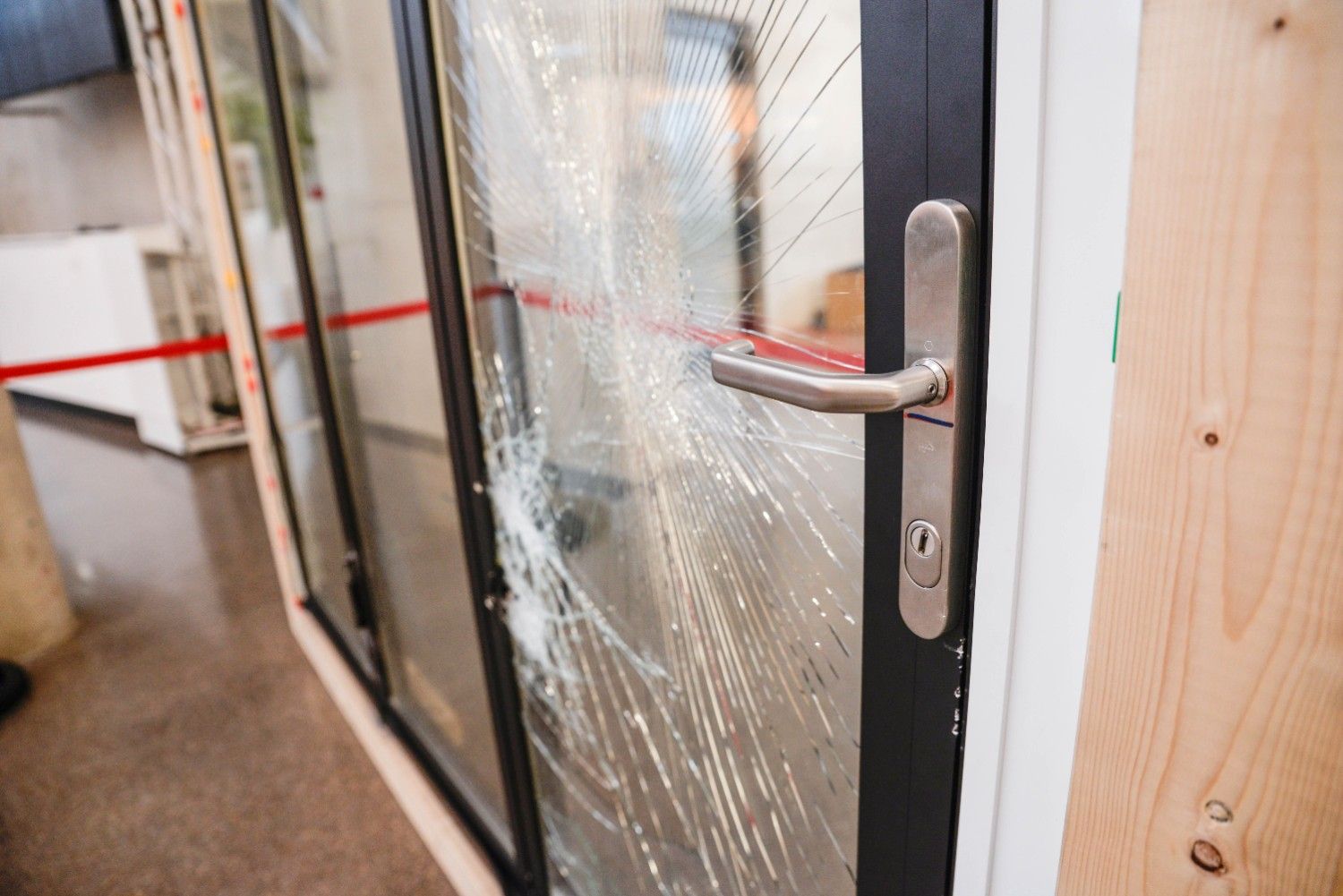
Laminated security rated glass, referred to as P*A glass, consists of two panes of standard float glass bonded together with a polyvinyl butyral (PVB) film in the middle. The break pattern of the glass combined with the PVB interlayer improves the resistance against penetrative entry slowing the perpetrator down from gaining entry.
The contribution of the frame in glass doors should not be overlooked. A strong, well-designed frame constructed from robust materials can significantly enhance the overall impact resistance of the door and improve its security performance. Choosing frame materials such as aluminium rather than plastic frames that can degrade through expansion and contraction will add to the long term performance of the frame and the glass door. The drive for slimmer frames to achieve a more refined aesthetic must be balanced with frame designs and material choices that do not prioritise visual appeal at the expense of the doorset’s functional integrity.
Material choices also play a part in the long term performance of glass doors. New materials based around nanotechnology such as carbon nanotubes can be incorporated into glass to repair microscopic flaws and create stronger impact-resistant glass 5 . The impact of emerging glass technologies, such as smart switchable glazing that can block or admit light at the flick of a switch, must also be evaluated to determine how they affect impact resistance.
The rigorous testing regimes set out in the standards we have discussed provide manufacturers with the opportunity to evaluate new product innovations, while giving specifiers confidence in the performance claims made for these new products.
5 https://repository.rice.edu/items/c5f4186f-ed92-4763-aea5-a706f6bb8b2f