Do I need planning permission for a glass canopy or veranda?
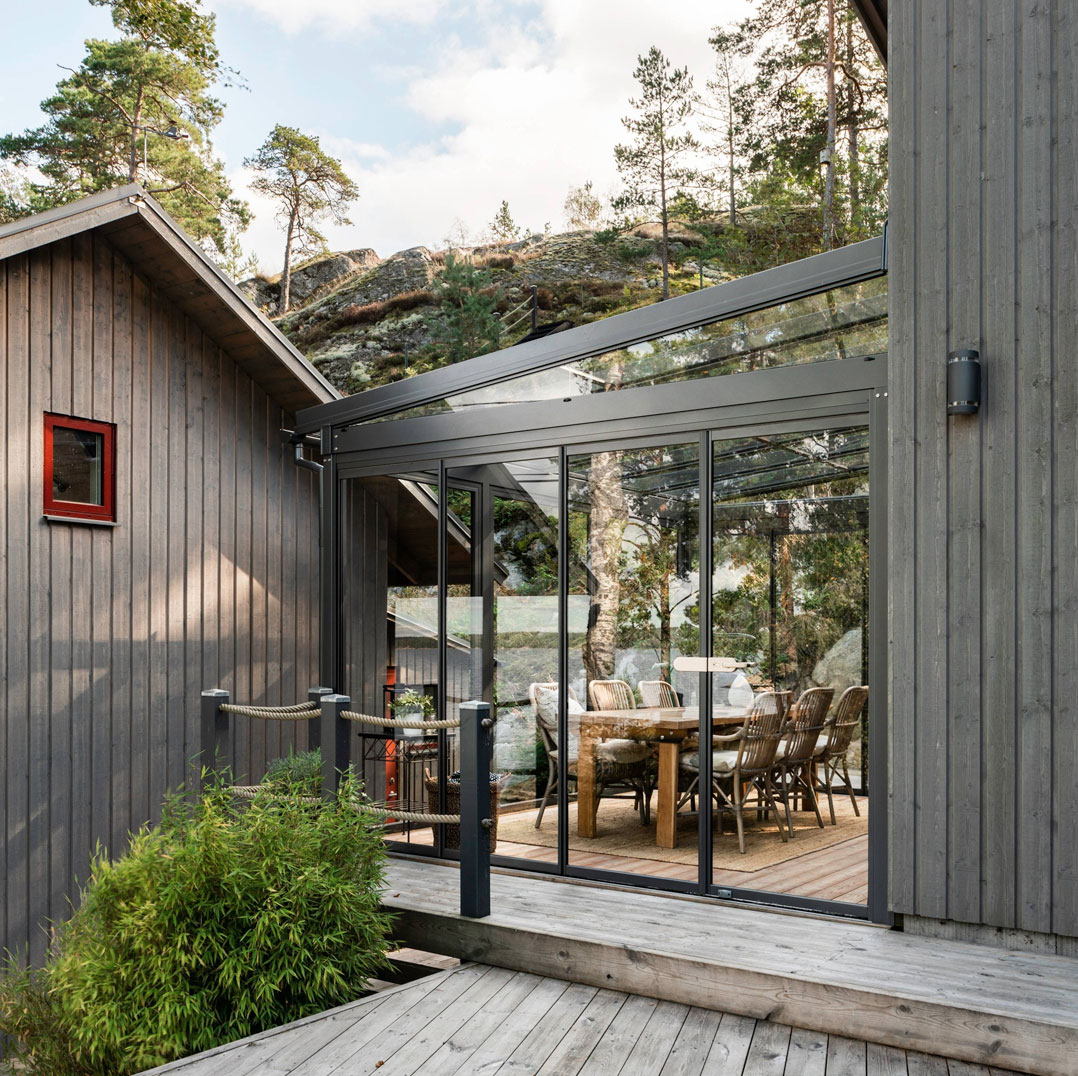
Solarlux Akzent Plus wintergarden Ecoline Bi-Folding Doors
Glass Veranda
Glass Veranda

Do I need planning permission for a glass canopy or veranda?

A glass veranda or canopy can transform a home and its garden, creating an elegant transition between the indoors and outdoors, while providing an inviting outdoor space that can be enjoyed throughout the year. If you’re considering installing one of these features, you may be wondering, “Do I need planning permission for a veranda or glass canopy?”

While glass canopies and verandas are generally considered permitted developments and don’t typically require planning permission, there are some exceptions when sign-off from local authorities will be necessary. In this article, we’ll go over the rules surrounding UK planning permission for glass structures such as canopies and verandas, including when approval is likely to be needed.

Glass Canopies
Glass Canopies

What is a glass canopy or veranda?

Canopies and verandas are structures designed to extend a home’s living space and create a connection with the outdoors. The glass verandas and canopies from Solarlux are engineered for beauty and quality, providing families with protected outdoor space that can be used for dining, entertaining, studying or relaxing. They can be wall-mounted to the side of the house or free-
standing structures, and we can customise them with features such as awnings, feature side walls that also offer privacy, sliding or fixed glazed panels, bi-fold doors, heating, lighting and smart control systems.

What’s the difference between glass canopies, verandas and wintergardens?

There are many terms used to describe glazed structures that bring indoor and outdoor living together. These labels are often used interchangeably, and with some overlap. Justin Spires, technical lead at Solarlux UK, explains that understanding the subtle differences and using the right terminology can help communicate preferences during the design stages. “It can also be useful when determining whether planning permission is required for a glass canopy or veranda,” he says.

At Solarlux, we specialise in designing and manufacturing high-performance glazed structures that are engineered to provide aesthetics, quality and year-round comfort. We typically refer to our products as ‘glass canopies’, ‘glass houses’ or ‘wintergardens’. Let’s clarify the terminology:

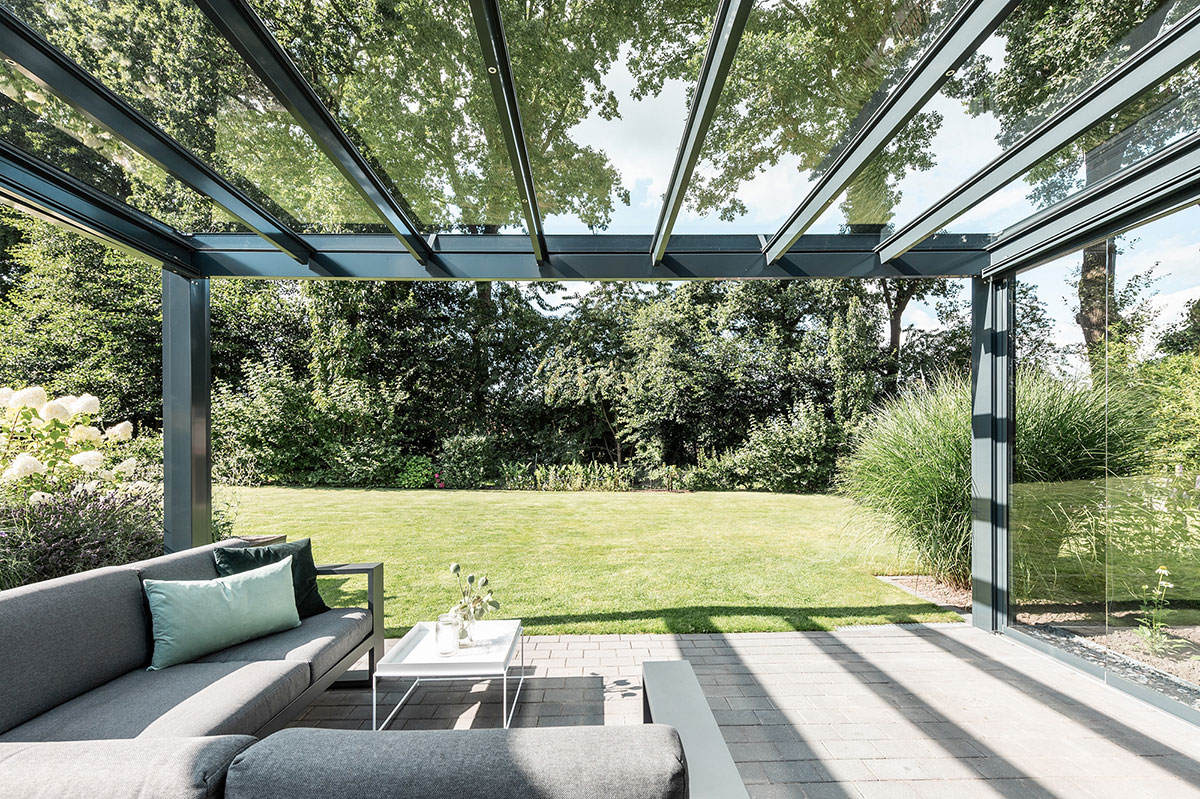
Glass canopy This is a broad term used to describe a glazed roof that provides shelter from the elements, glass canopies can be free-standing or attached to a building, they are typified by having at least one open side below.
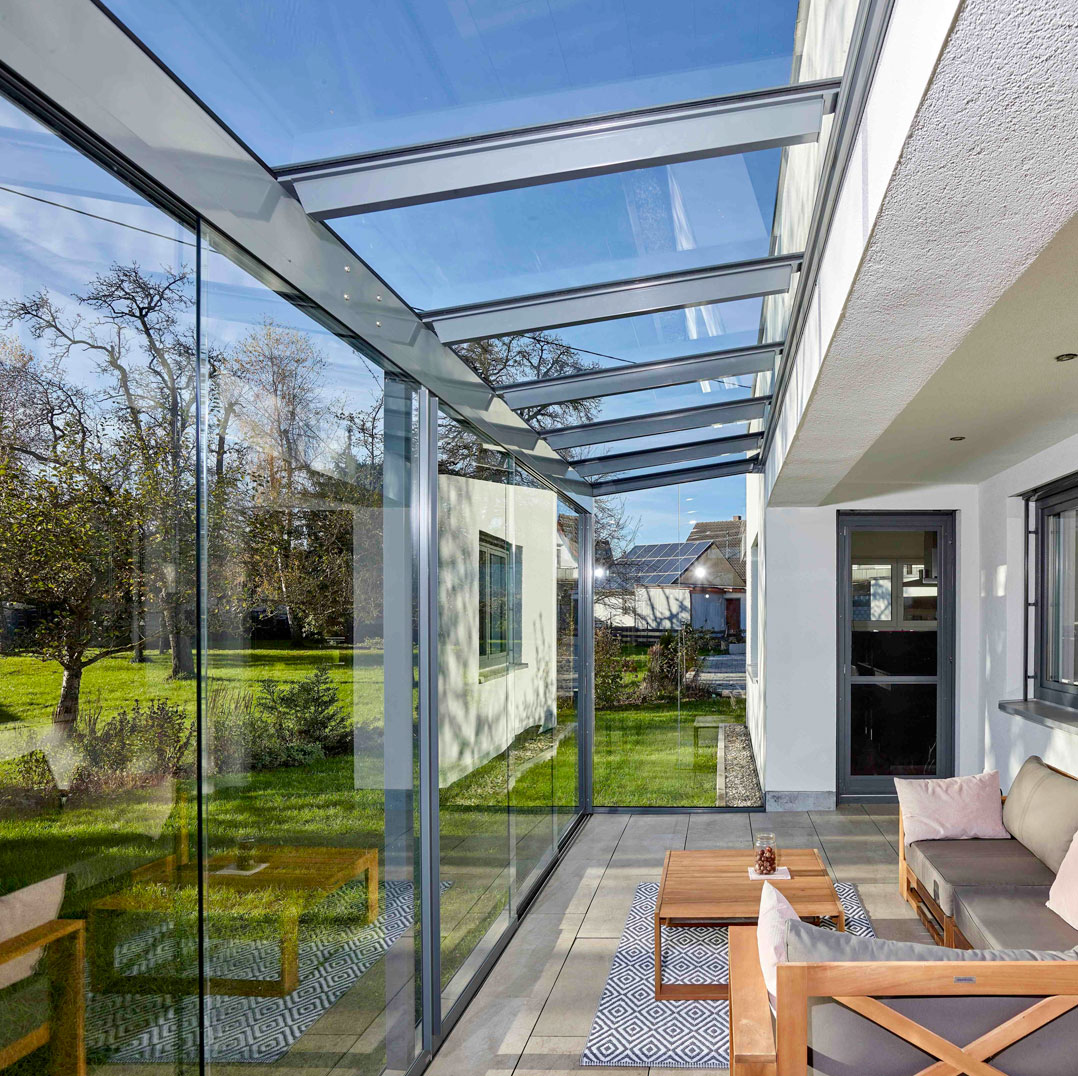
Glass veranda A glass veranda is a lean to type of glass canopy that’s usually wall-mounted to the side or back of a house or building and supported at the front eaves beam by aluminium posts . As with a glass canopy, they typically have at least one open side below.
Glass house A glass house is a fully enclosed canopy or veranda roof with a combination of fixed panels, movable panels or bi-folding doors which create a fully enclosed structure. They can be free-standing or partly wall mounted.
Wintergarden (glass extension) Wintergardens are highly engineered glazed structures with thermally broken aluminium frames. They combine quality, elegance and thermal comfort, creating a beautiful space that’s fully integrated with the thermal envelope of a house or building.
Conservatories Commonly used to extend the living space of UK homes, conservatories are typically constructed with uPVC frames and standard double-glazing. They differ from Solarlux wintergardens in both design and performance.

When do I need planning permission for a glass canopy or veranda in the UK?

In many cases, glass verandas and canopies fall under permitted development rights, which permit certain home improvements to be made without the need for planning permission.

Justin warns that permitted development does not apply in every situation: “The rules vary depending on factors such as the location of the property, the size of the glass canopy or veranda and its position in relation to the adjoining home or building,” he explains.

You are likely to need planning permission if the following size, height, and placement considerations apply:

  • The structure will be more than 3m tall.
  • It will project more than 3m from the rear wall of a terraced or semi-detached house or 4m for detached houses.
  • It will cover more than 50% of the land around the original house.
  • The property is a listed building, or if it is located in a conservation area, National Park or Area of Outstanding Natural Beauty (AONB).
  • The veranda or canopy is located on a roof or above ground level.
  • The veranda or canopy is situated at the front of the property, altering the building's appearance.

Other reasons that planning permission may be required for a glass veranda or canopy include:

  • If the structure could have a significant impact on neighbouring privacy or light.
  • If the property is still under construction – Adding any type of glazed structure may be considered a material change to the approved plans.
  • If permitted development rights have been removed - If the property has been built in the last 10–20 years, the permitted development rights may have been removed. This is often the case for large developments where design uniformity is desired.

Please note that this list is based on the planning requirements for England. Glass canopy planning rules in the UK fall to the devolved nations, so Scotland, Wales and Northern Ireland have similar rules, but the specifics can vary. Before beginning any project, be sure to check the property’s planning history and consult with the local planning authority if you’re unsure whether permitted development rights apply.

What’s the difference between building regulations and planning permission?

Even if a glass canopy or veranda is exempt from needing planning permission, Justin highlights that the structure may, and its installation, still need to comply with current Building Regulations. “The Building Regulations are separate from the planning system and are legal requirements relating to the safety, structural integrity, fire performance and accessibility of buildings in England,” he notes. Similar requirements apply to Scotland, Wales and Northern Ireland.

For glass canopies and verandas, Building Regulations that may be relevant include:

  • Part K: Protection from falling, collision and impact
  • Part M: Access to and use of buildings
  • Part B: Fire Safety.

If a glass veranda or canopy is separated from the main house or building by external quality walls, doors or windows, open-sided, doesn’t contain electrics and has less than 30m² of floor area, then it’s unlikely to require Building Regulations approval.

However, if you’re installing a structure that’s

  • Permanent,
  • Attached to another building,
  • Glazed or
  • Includes electrics such as heating or lighting.

Then approval may be necessary.

The presence of glazing is one of the main reasons that a glass canopy or veranda may require Building Regulations approval. Justin explains: “Safety is the key concern here, especially the risk of falling overhead glass or people walking into the glazed walls. In these cases, the glazing may need to use toughened or laminated safety glass and include visual markers – known as manifestation – to ensure the glazing is easily seen.”

As with the planning permission, if you’re not sure whether Building Regulations approval is required for your specific project, it’s best to check during the design stage. The Solarlux team can help you understand the requirements and ensure that your glass veranda or canopy is compliant.
Solarlux glass verandas and canopies: Guiding you through planning permission and building regulations

With so much to think about, getting planning permission and ensuring Building Regulations compliance for a glass canopy or veranda can feel overwhelming. At Solarlux, we combine design expertise with technical and regulatory knowledge to ensure your project meets all necessary requirements.

Our team works closely with specifiers, architects and building control professionals to ensure the project runs smoothly, from concept to completion.

Get in touch
To learn more, you can explore our range of verandas and glass canopies. Or contact a member of our team for expert guidance on your next project.