Using natural resources

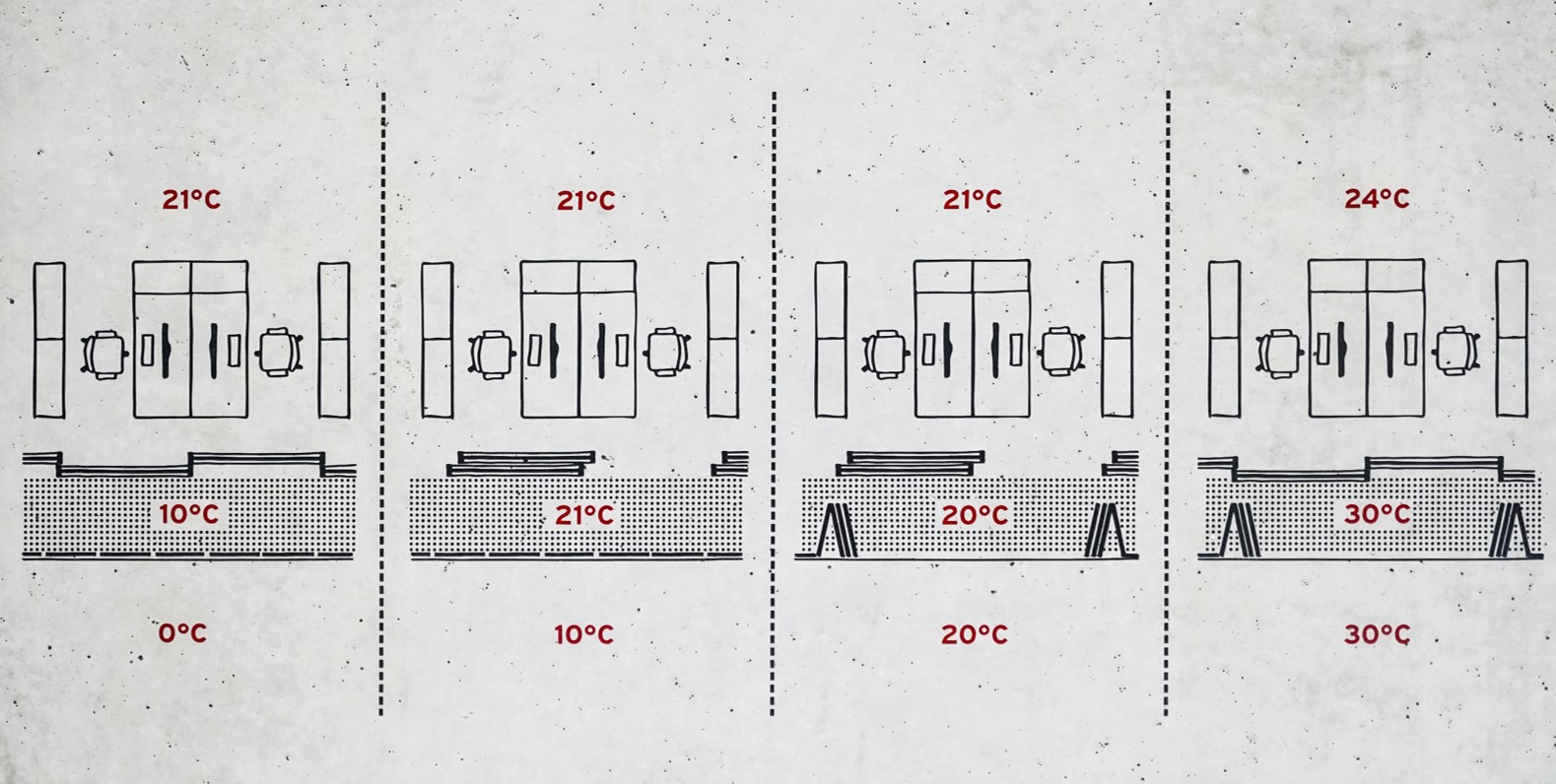
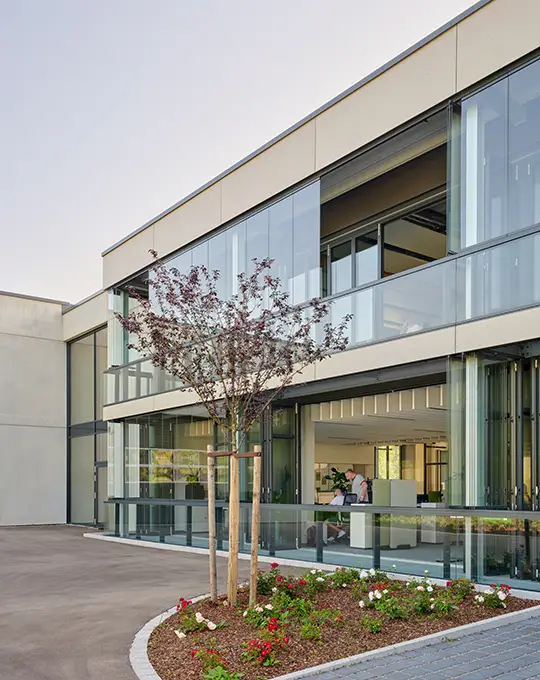
Double facades consist of the inner shell with a thermally insulated system and the outer level with uninsulated glazing, which keeps out weather and sound. The resulting corridor serves as a buffer zone between the outdoor and indoor climate. Users can control both façade layers manually themselves. Natural ventilation and solar heat reduce the energy expenditure for cooling and heating. In combination with geothermal energy and PV, the building's supply is almost entirely from natural resources.
Skizze einer Balkonverglasung von Solarlux

Protective glazing for balconies and facades

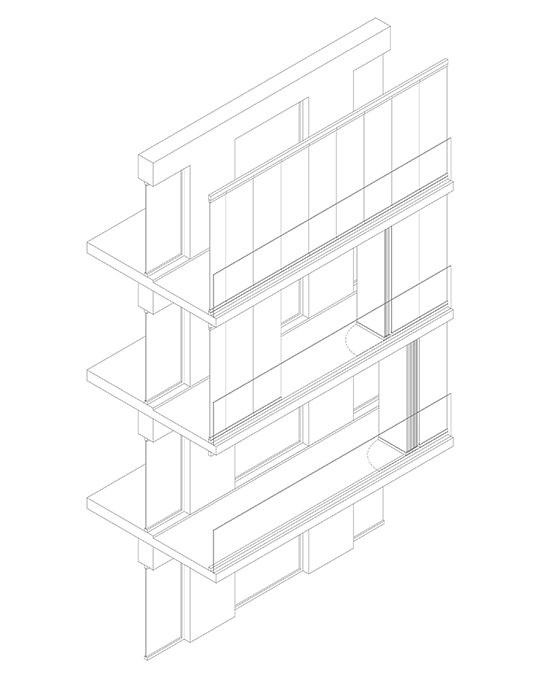
Today, noise emissions and changing climatic conditions require additional protective measures for facades, loggias, and balconies. Durable, low-maintenance, and needs-based Solarlux glazing—either as a thermally insulated or as an uninsulated solution—meets the requirements for healthy and easily rentable living space. The use of flexible glazing solutions creates high-quality and tranquil apartments and balconies that can withstand future demands.

Solarlux Campus Doppelfassade mit Fassadenkorridor

The façade corridor

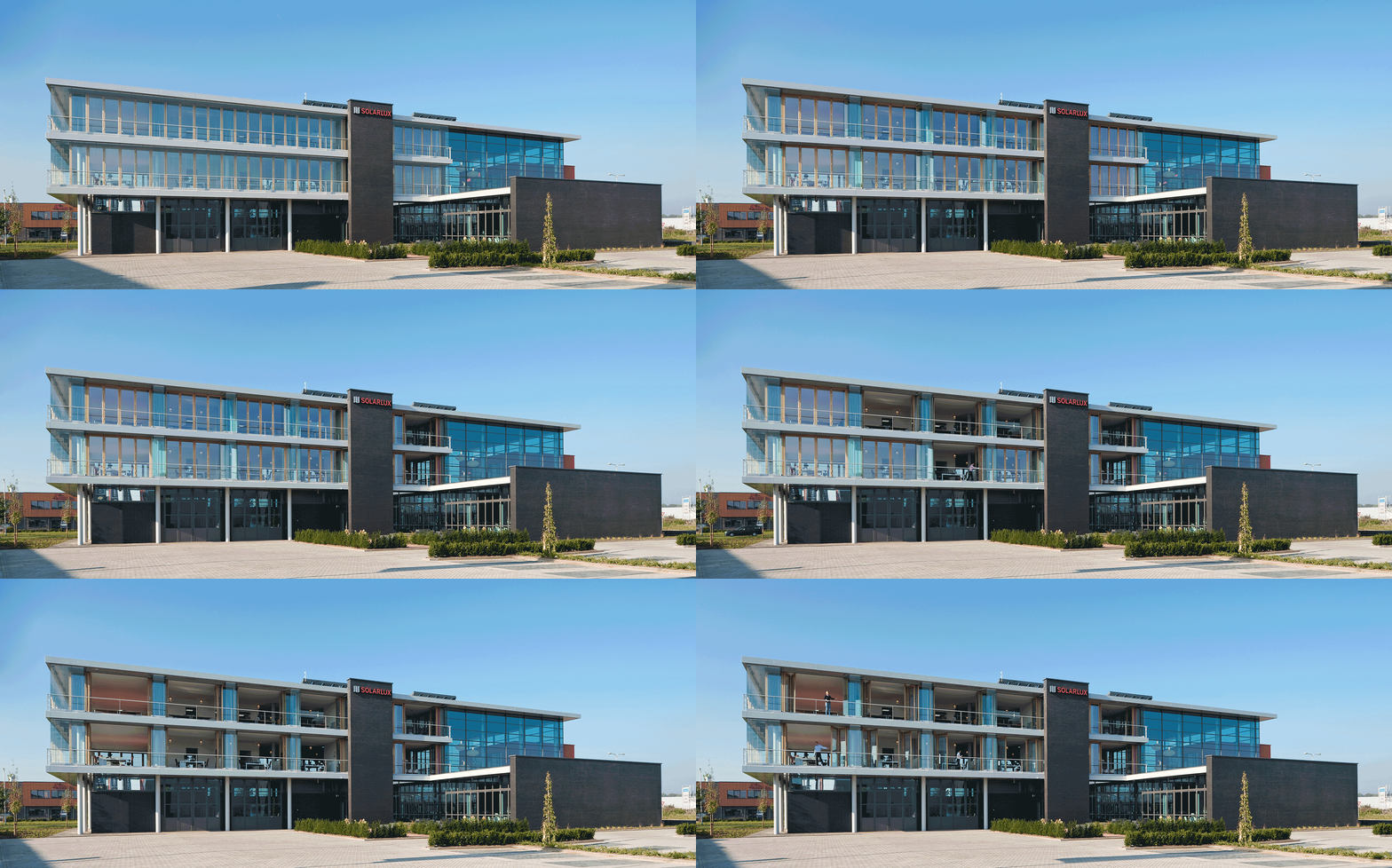
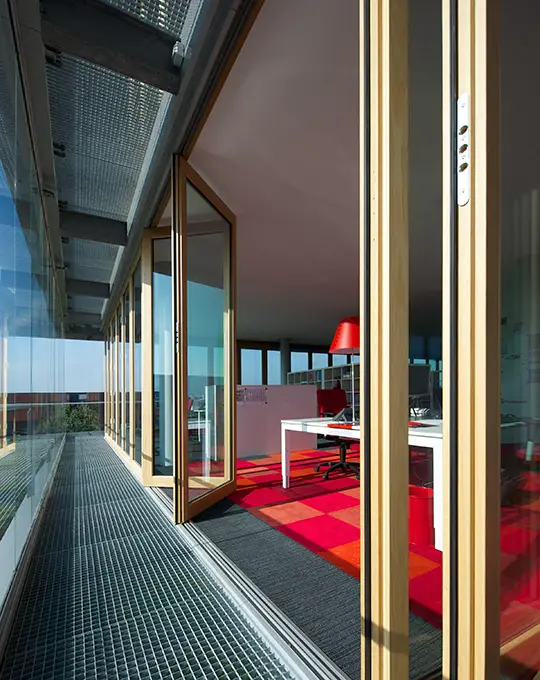
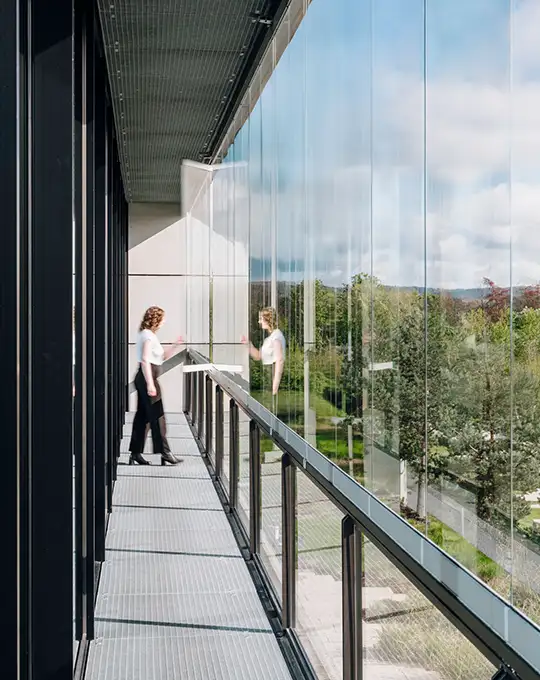
A walkable façade corridor is created between the levels, which functions as a solar air collector . The short-wave solar radiation is absorbed in the space between them and heats the air. On cooler days, employees can manually open the inner glass level to channel the pre-heated fresh air into the building.
When the outside temperature is high, the outer glass layer is opened, allowing the heated air to escape. The inner, thermally insulated facade remains closed to protect the interior from overheating. The installed sun protection glass allows plenty of daylight to enter, but reflects infrared radiation and thus prevents unwanted heat generation. 

Control system opening variants

Doppelfassade Öffnungsvarianten
Doppelfassade in Bewegung Solarlux Nijverdal
System Overview

The Solarlux Co2mfort facade

Doppelfassade Bürogebäude Solarlux Nijverdal

Solarlux Nijverdal site

It all began in 2010, when an innovative building's shell was sought for the Dutch branch in Nijverdal. This should reflect the corporate values of openness and transparency to the outside world, establish communicative connections between indoor and outdoor spaces, and take into account the manufacturer's product range. On this basis, façade planners Marcel Bilow and Dr. Thiemo Ebbert from imagine envelope developed the CO2mfort façade together with Thomas Auer  from Transsolar, Professor of Building Technology and Climate-Friendly Construction at the Technical University of Munich, in cooperation with the TU Delft  . It is based on a resource-saving energy concept with minimal use of technology (low-tech instead of high-tech) and places particular emphasis on the active participation and influence of the employees. 

.DEBBEABB a:hover { background: #fff !important; color: #d51130 !important; }
Solarlux Campus Melle mit Doppelfassade

Solarlux Campus

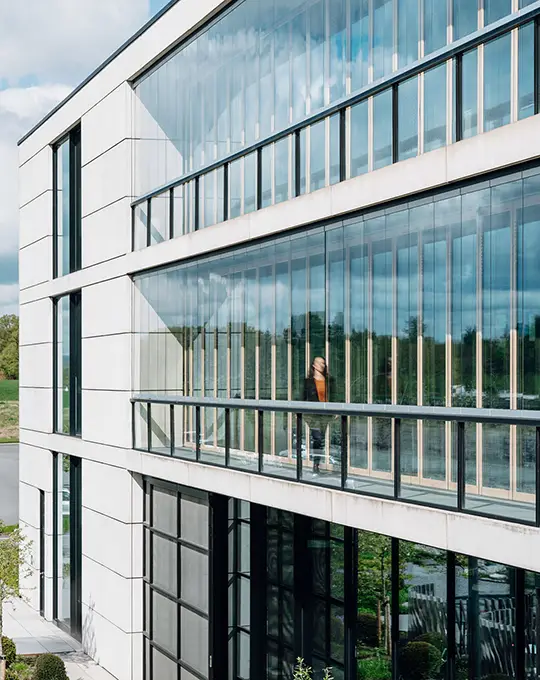
The two-layer CO₂mfort facade has established itself as a pioneering concept at Solarlux. Following the successful implementation of the Dutch branch in Nijverdal (2010) and the new build of the Swiss subsidiary (2012), the concept was applied on a large scale in the development of the Solarlux Campus in Melle (opened in 2016). On the upper floors of the large foyer, the building's shell was designed as a double-skin facade. Since 2016, this has not only contributed to the high level of satisfaction of employees at the workplace, but also makes an active contribution to energy efficiency and resource-saving operation of the company site. Both cero III sliding window and Woodline folding walls are used as thermally insulated room closures.


.ABFCABBEFBACA a:hover { background: #fff !important; color: #d51130 !important; }
Linara Kaufbeuren mit Doppelfassade

Linara Location Kaufbeuren

The most recent practical example is the showroom of the Allgäu-based building element dealer Linara in Kaufbeuren, which opened in 2024, a 100 percent subsidiary of the Solarlux Group. Here, too, the CO2mfort facade  ensures natural air conditioning of the offices with fresh air supply. The double-skin façade was designed in the area of the office landscape, allowing individual and manual control system of the indoor climate. Architect Peter Kuczia on the "Depending on the weather, employees can unfold the bi-foldings inside and let the pre-heated fresh air flow into their workspaces." This is especially advantageous on colder days. In hot weather, only the outer slide-and-turn elements are fully opened. This prevents heat build-up."

.ECFDCCAB a:hover { background: #fff !important; color: #d51130 !important; }
Energy concept
Doppelfassade und Energiekonzept

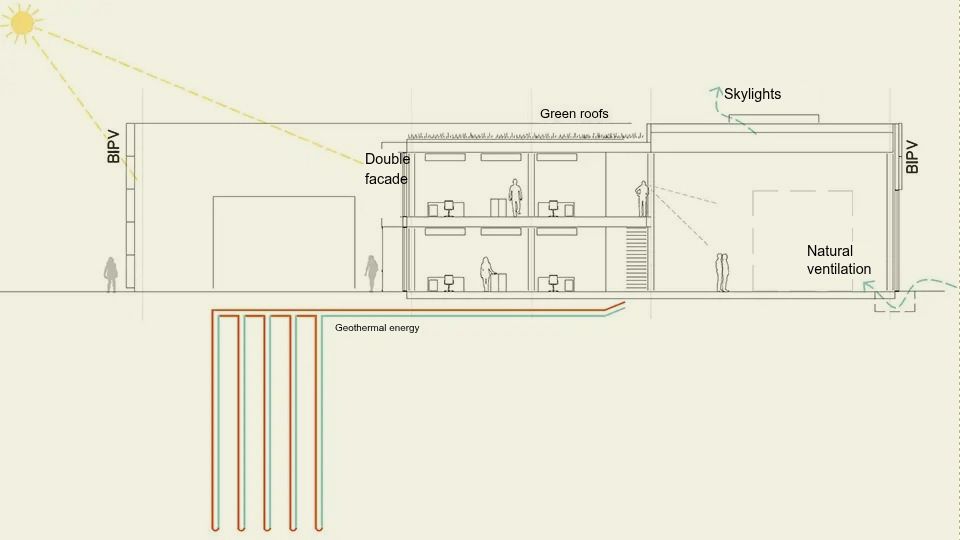
In terms of energy, the double-skin facade is part of a larger concept: it functions optimally in combination with a ventilation concept and a sustainable supply from renewable energy sources. The Kaufbeuren diagram illustrates the interplay: The backflow via the facade works via a vacuum in the building and by aligning the skylights with the main wind direction. Geothermal energy is used to generate heat, while the drive energy for the heat pump comes from building-integrated photovoltaics. In addition, there are other internal heat sources (passive solar energy of the double-skin facade, server rooms). The offices and showrooms are heated and cooled through component activation.

Double facades in residential construction
Konzepthaus Salzkammergut tiefer Balkon Verglasung

Concept house Salzkammergut

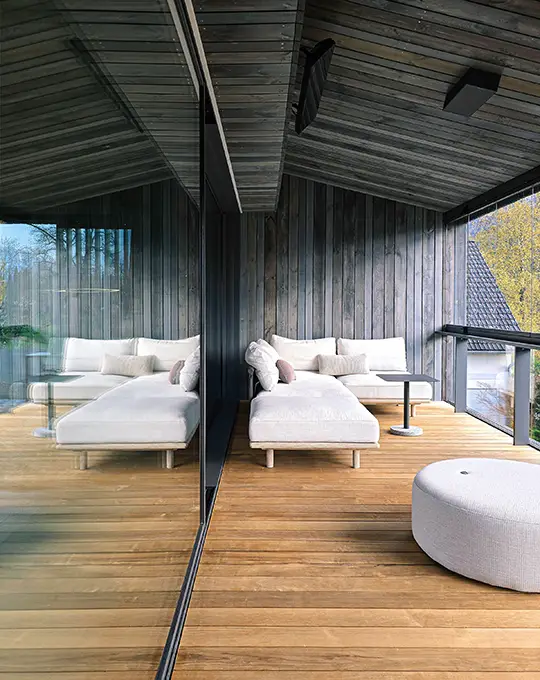
How can environmentally friendly living be combined with a high standard of living? Answers to this question are provided by the new Solarlux concept house in the Salzkammergut region of Upper Austria. The building, which was constructed almost entirely in wood, was designed as an atmospheric place that makes modern and sustainable architecture tangible with all the senses. The architect achieved this, among other things, through careful integration into the unique mountain landscape, generous, movable glass facades that create seamless transitions between indoors and outdoors, a loggia as a climate buffer, and a building technology that consistently relies on renewable energy sources. 

The 3 m deep loggia serves as a climate buffer, with the indoor climate individually controlled by the opening and closing of the cero sliding window on the inside and Proline T sliding-turn elements on the outside.

Sanierung IBA Thüringen

Cold winter gardens as a climate buffer

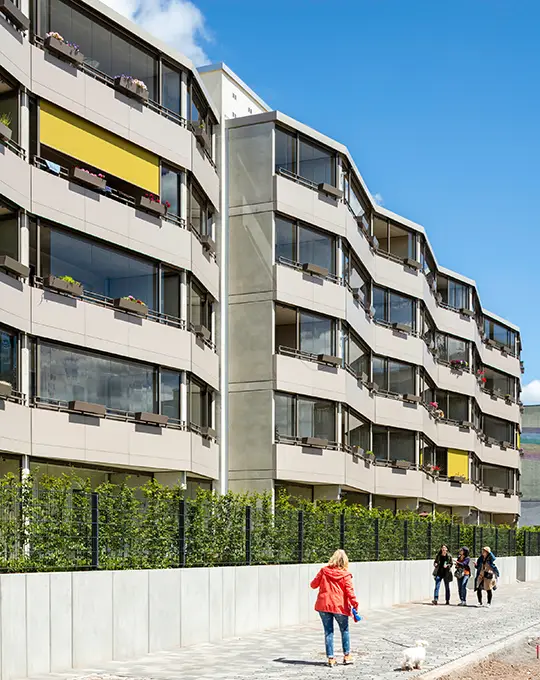
In the renovation of the IBA Thuringia, concrete modules with sliding-turn glazing from Solarlux as a climate buffer extend the living space to the outside. The idea of the Hütten und Paläste office: "In the added Wintergardens, the residents can control the climate and atmosphere of their open space themselves."  This climate buffer can be used as a wintergarden or terrace all year round, thus expanding the living space. It replaces conventional additional insulation and reduces the energy consumption of the apartments.

Glasfassade als Pufferzone: Stadthaus Wien

Glass front as a buffer zone

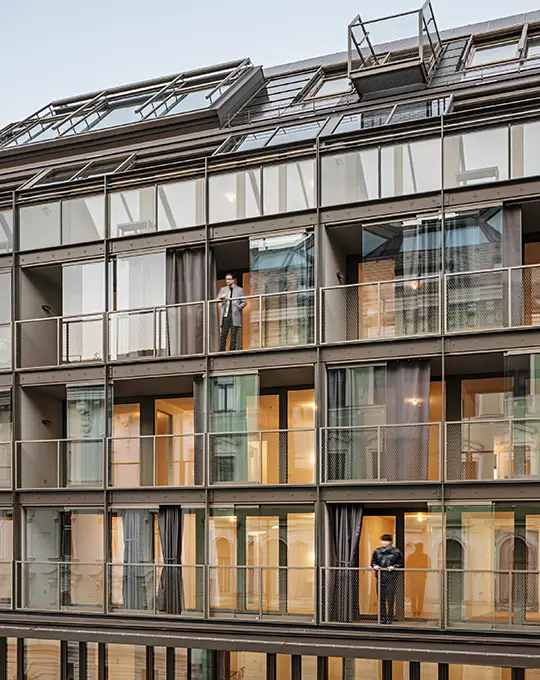
In Vienna's 5th district of Margareten, feld72 Architekten ZT GmbH closed a gap that had existed for decades. The design eye-catcher is the delicately structured glass front facing Straussgasse, which encloses and at the same time emphasizes an old building. Visual depth is created by the glass, one-meter-wide buffer zone in residential floors three to five. These are designed as convertible Wintergardens protected from noise and weather, which can be flexibly opened and transformed into airy loggias using floor-to-ceiling sliding elements of the Solarlux Proline S Mega system.

Your Consultants