bi-folding doors Avenue Parmentier

Copyright: Schnepp Renou

The bi-foldings support our architectural concept of openness and permeability.
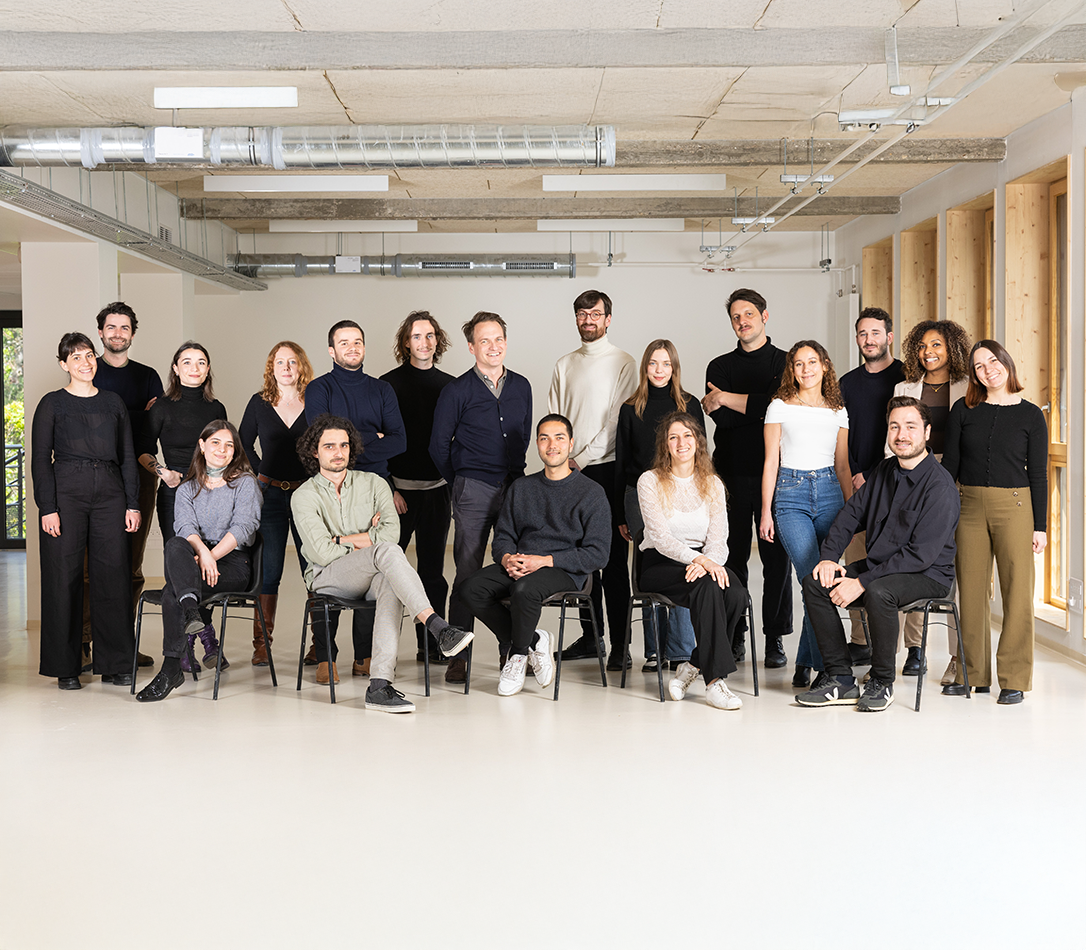
Claire de Fraguier, Project Architect, Atelier Téqui
Atelier Tequi
Atelier Tequi
About the architectural firm

Atelier Téqui has been developing projects on different scales and contexts since 2005 – from new construction to renovations, extensions and additions. The portfolio ranges from public institutions and office buildings to residential projects.

The studio's design approach is based on sustainability through conscious use of resources and the use of high-quality materials. Their architecture stems from a deep understanding of the history of the place, so that the buildings become part of a long temporal development that gives room for patina and aims for durability.

In 2018, Louis Téqui was named by the European Centre for Architecture, Art, Design and Urban Studies as one of the "40 under 40" – a voice that will help shape the future of European architecture.
Dialogue between past and future

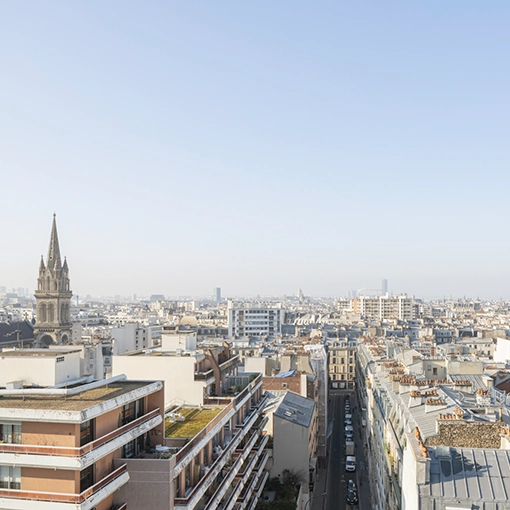
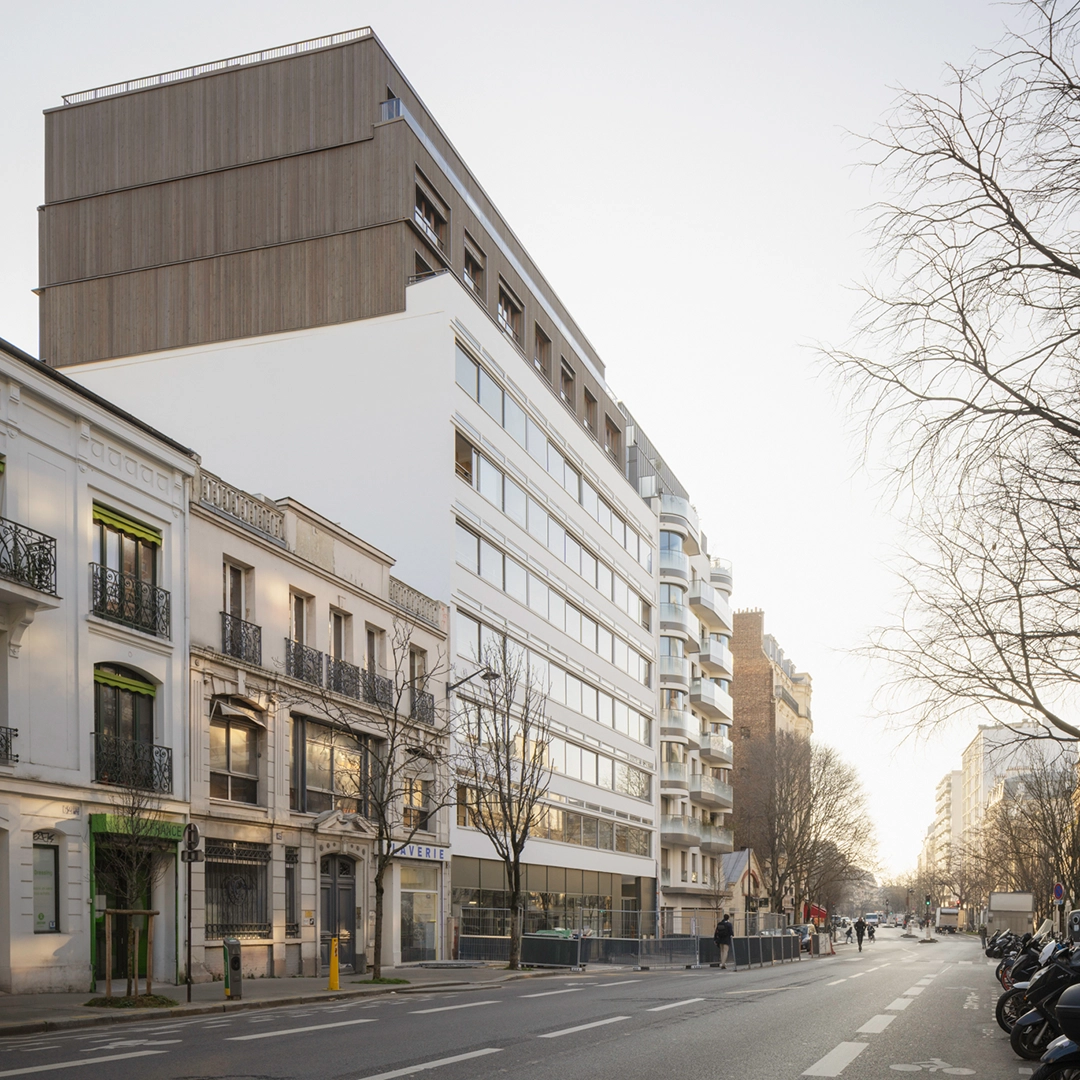
Atelier Téqui Architectes has convincingly succeeded in building on what already exists and preserving the city's history with the transformation of a former multi-storey car park into a residential building in the 11th arrondissement of Paris. The project impressively demonstrates how building in existing buildings can not only conserve resources, but also create identity – as a respectful dialogue between past and future.

Demolition or preservation? When the architectural competition for the former Peugeot car park at Avenue Parmentier 58-60 was announced in 2018, the tendering left both options open. The building was constructed in 1957 by Claude Béraud as a two-story parking garage and gradually increased to five floors in the 1960s. The internal building organization is typical of garage buildings of this period: half-floors are connected to each other via side ramps. The supporting structure consists of internal columns as well as main and secondary girders that support slender concrete ceilings. This construction method allowed for large, column-free areas that could be used flexibly.

The building was originally constructed in 1957 by Claude Béraud as a two-storey car park and gradually increased to five storeys in the 1960s.
Copyright: Atelier Tequi Architectes

Glas-Faltwand Avenue Parmentier
Respectful renovation with a view

The architectural firm Atelier Téqui won the competition with a design that focused on sustainability, durability and a respectful approach to the existing structure. They convinced the jury with a comprehensive conversion and renovation concept, which was supplemented by a three-storey extension in timber construction. The existing concrete supporting structure could be largely preserved. The new extension is statically founded using micropiles and additional supports, so that the loads are transferred directly into the ground and the existing structure is not subjected to additional stress.

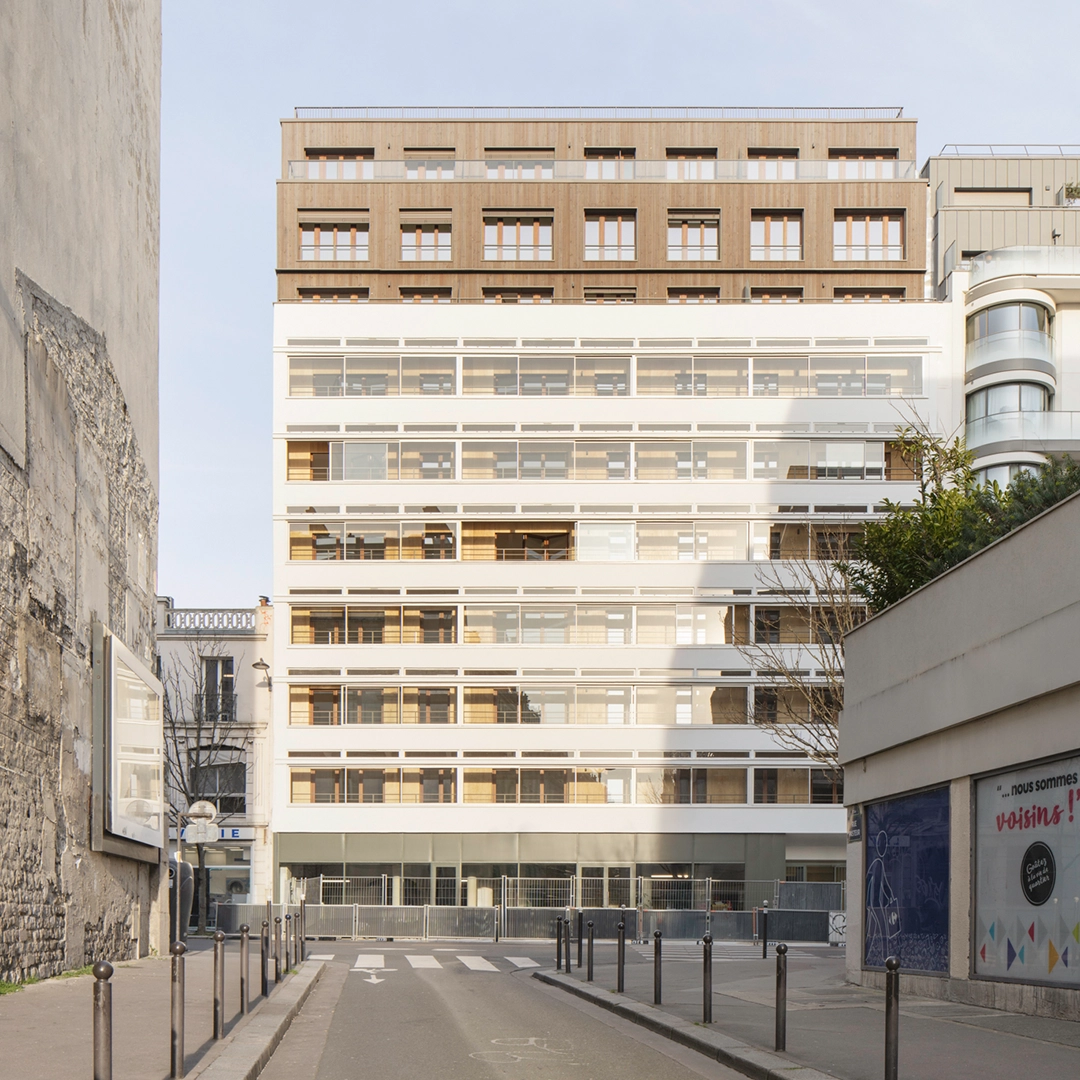
The striking street front of the former multi-storey car park facing Avenue Parmentier
was retained and at the same time converted into an openable double-skin facade.

Constructive interventions with minimal stress

The original facade appearance facing Avenue Parmentier was preserved, but the building's shell converted into a functional double-skin facade. Today, the vertical, warm-looking wooden paneling of the modern extensions provides an exciting contrast to the typical street view from the 1960s with its wide, continuous window bands.

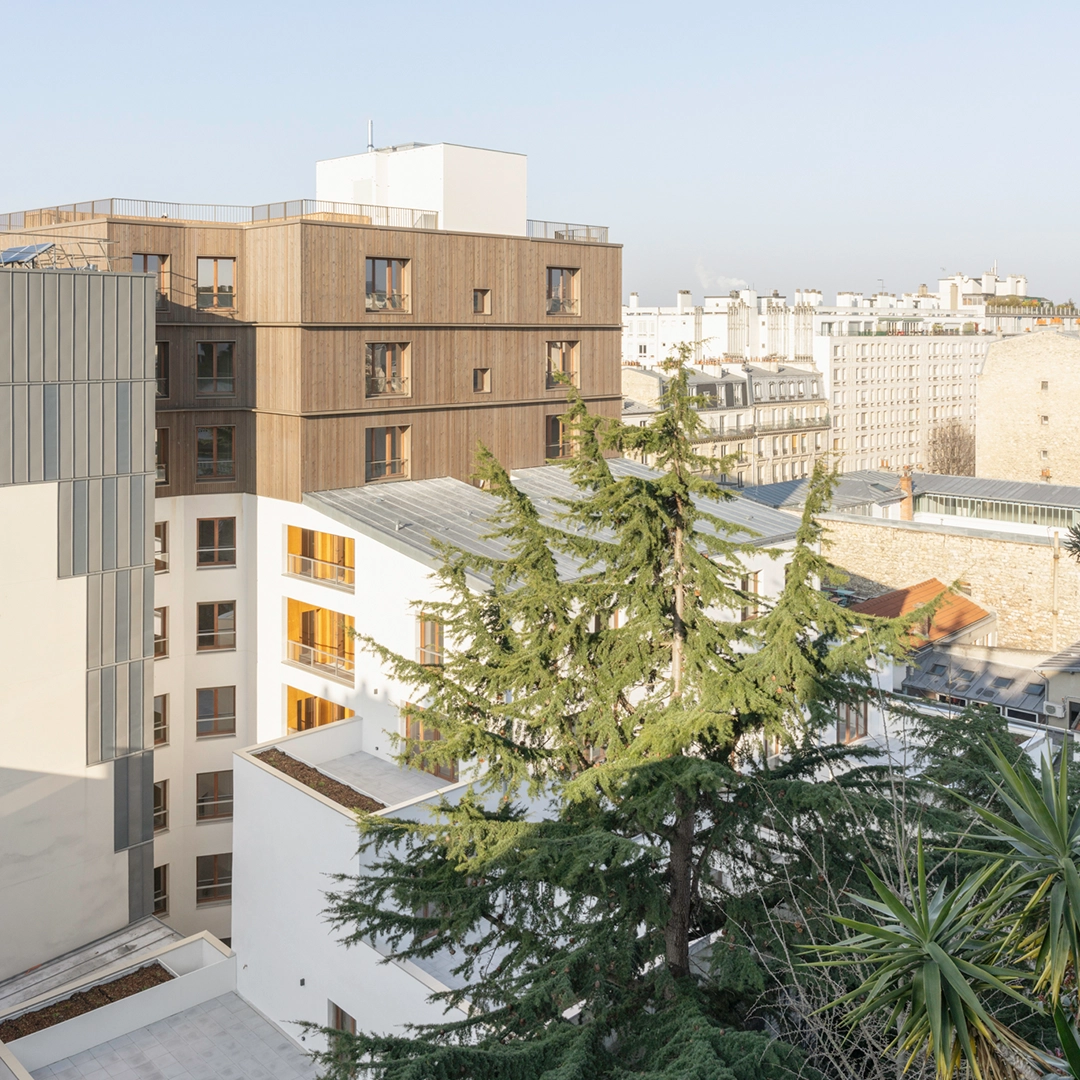
The central design idea was the opening and permeability of the formerly closed building. To achieve this, the side ramps were completely dismantled and selected ceiling areas were partially removed. This created spacious courtyards and air spaces that bring light, air and visual connections into the building's interior. Green courtyards and roof gardens not only improve the microclimate, but also contribute to sustainable rainwater management and a high quality of stay.

Glas-Faltwand Avenue Parmentier

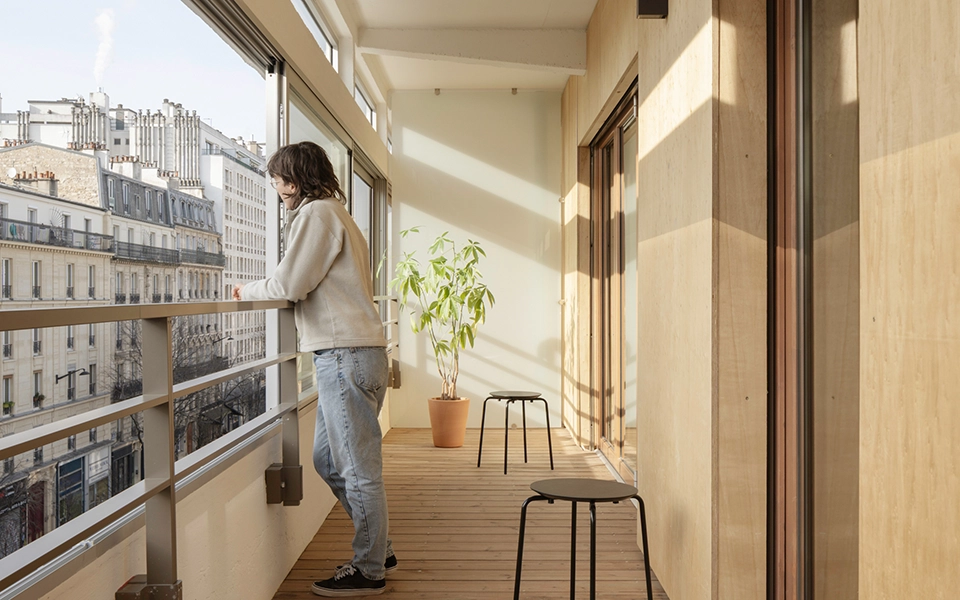
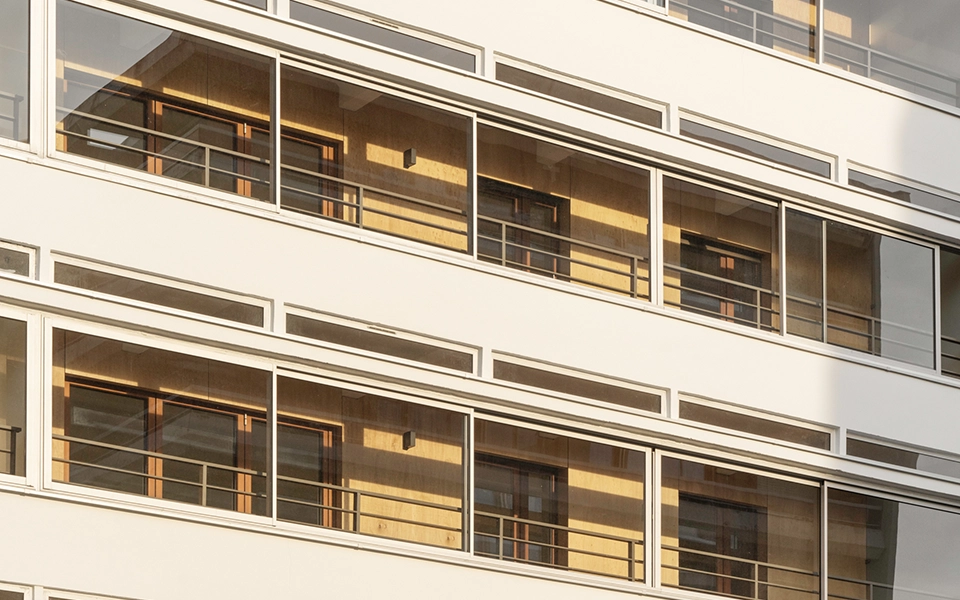
The space in between is used as a wintergarden and extends the apartments to the outside. In addition, it significantly increases the quality of living as a sound and climate buffer.

Individual living with a historical reference

In three building sections, 63 individual residential units with two to five rooms were created, including two maisonette apartments. Almost all apartments have spacious outdoor areas in the form of Wintergardens, loggias or terraces. Many apartments are plugged through, and on the ground floor, private gardens offer additional retreats.

Visible original supporting structures are a reminder of the history of the place and give the rooms an authentic atmosphere with raw industrial charm.

Glas-Faltwand Avenue Parmentier

Both the insulated and uninsulated levels of the double-skin facade can be flexibly opened by the residents. In this way, the room climate can be determined by yourself.

Glas-Faltwand Avenue Parmentier
Between space and history: the double-skin façade

The existing street-side façade was retained in its uninsulated original form, but was supplemented with a thermally insulated level behind it to form a double-skin facade that can be fully opened. The space between them serves as an acoustically and thermally effective wintergarden. This extends the living space of the residents outwards and offers generous views of the avenue and the city of Paris. The outer exposed concrete of the existing building was refreshed with white paint, and the old parapet bands were modernized with simple sliding elements. For the new, recessed shell, lightweight walls with rear-ventilated wood-based cladding were chosen. This primary façade can be opened over a large area with thermally insulated Bi-folding doors.  

The three-storey addition in timber construction forms a successful
Contrast to the white-painted facade with the horizontal window bands.

Glas-Faltwand Avenue Parmentier
Harmonious wood diversity

Various types of wood set targeted accents throughout the project and form a warm contrast to the industrial concrete charm of the existing building. The facades of the extension are predominantly clad in larch, while poplar wood was used for the interior surfaces in the Wintergardens and loggias. In the apartments, solid oak parquet creates a homely atmosphere. Spruce was used as construction timber for the roof and wall elements. All windows and bi-foldings are made of pine wood, which, together with the pine wood flooring of the Wintergardens, forms a harmonious, visual unit.

The fabric of the building was largely preserved. Through targeted dismantling
however, it was opened in such a way that bright, permeable living spaces were created.

Generous openings and optimal sound insulation

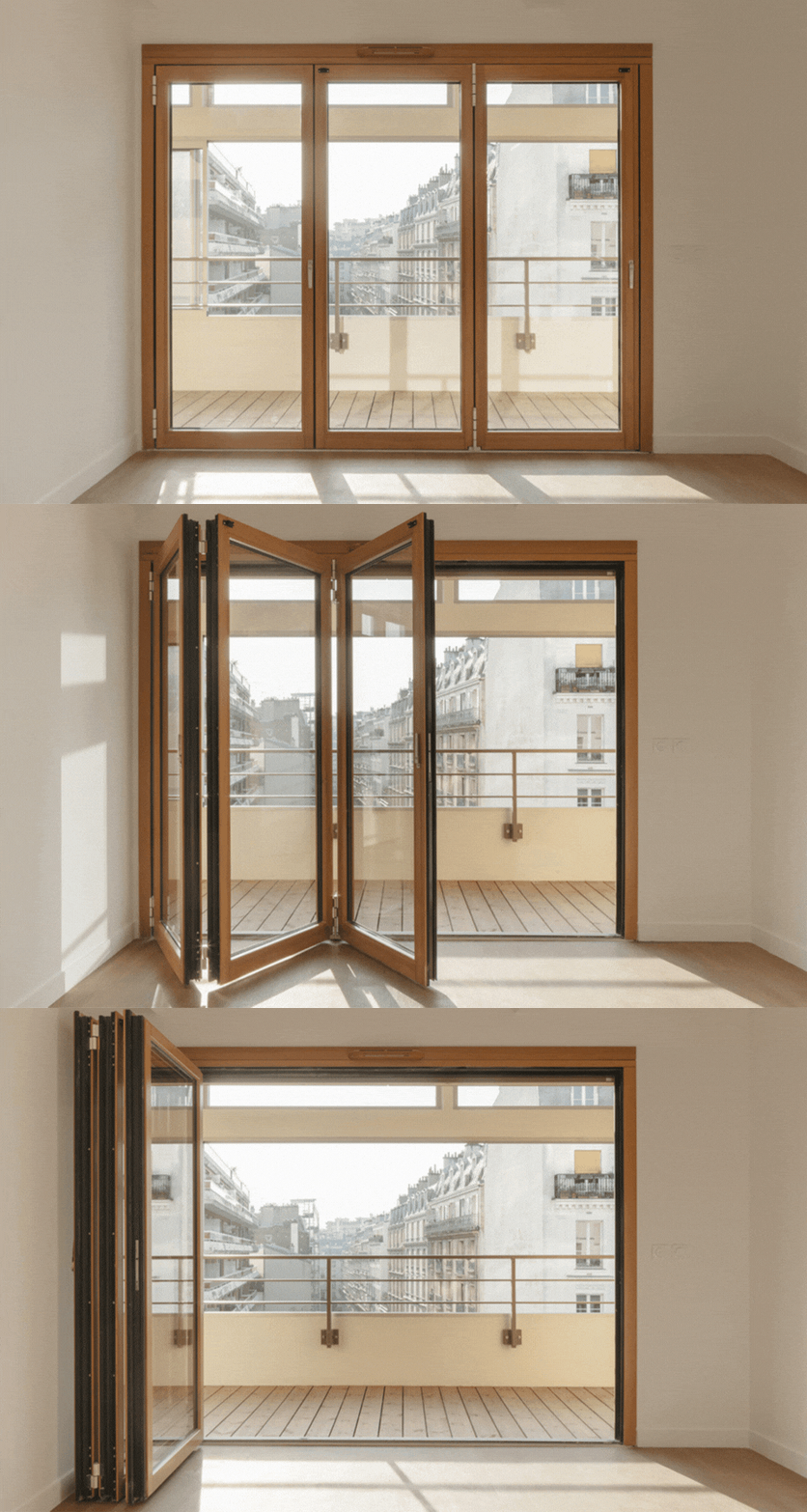
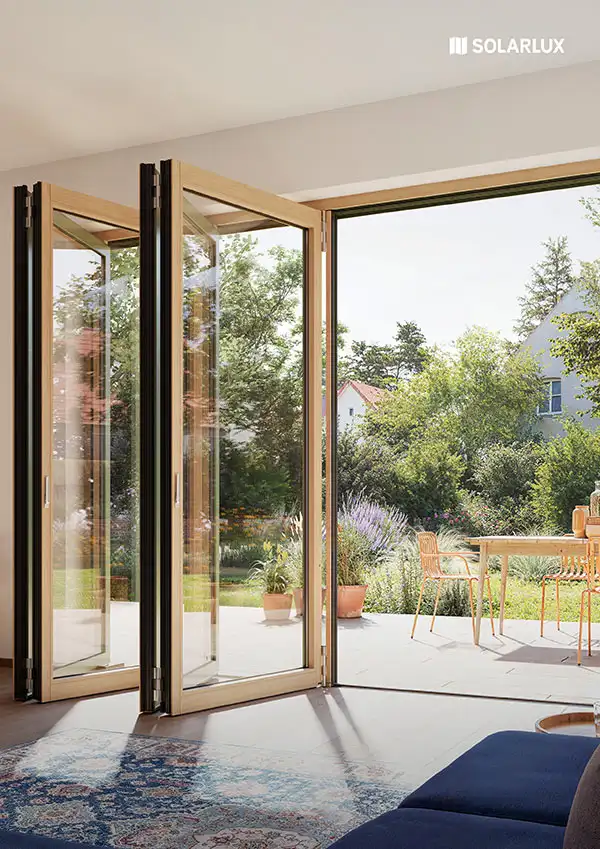
As transitions into the Wintergardens, project architect Claire de Fraguier deliberately chose bi-foldings because she greatly appreciates their opening principle: ""They enable generous, barrier-free transitions and allow the interior and exterior spaces to blend seamlessly together." A total of 18 bi-foldings of the Woodline system from Solarlux were installed. Each element consists of three segments that open inwards and – depending on the installation situation – can be folded into a narrow package either to the left or right. "The bi-foldings support our architectural concept of openness and permeability," de Fraguier continues. "That's why we campaigned for their use early on." On the subject of sound insulation, she adds: "Thanks to the optimal sound and thermal insulation of the Woodline folding walls, we were also able to ensure the required noise protection in the apartments – a crucial aspect given the location on the busy Avenue Parmentier."

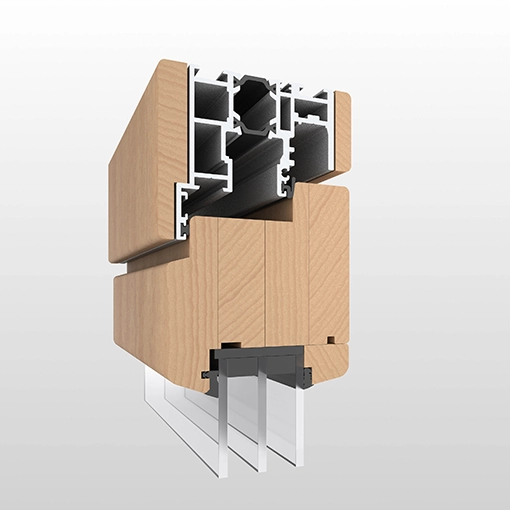
The Woodline series from Solarlux is one of the few Bi-folding door systems made of wood on the market. The slim frame profiles allow plenty of daylight into the apartments even when closed, while the high functionality and comfort meet the requirements of modern living.

Glas-Faltwand Avenue Parmentier

A bi-folding door consists of three elements that open inwards and, depending on the installation situation, can be folded either to the left or right to form a narrow package.

Sustainable transformation that acts as a role model

With the careful metamorphosis of the existing building, Atelier Téqui Architectes succeeds in creating an outstanding example of sustainable urban renewal in line with the climate plan of the city of Paris. The central design idea was the opening and permeability of the formerly closed building. The combination of resource-saving timber construction and the respectful handling of the historical stock ensures bright, open living spaces with a high level of comfort and generous outdoor connections. The building, which is built from renewable raw materials, impresses with its flexible double-skin façade, which expands the living space, improves the indoor climate and ensures optimal sound insulation. This creates a lively dialogue between the past and the present – a home that creates identity and at the same time meets modern living standards.

Glas-Faltwand Avenue Parmentier
Construction board

Project: Renovation and extension of the former Peugeot multi-storey car park from 1957
Space program: 63 apartments, 1 commercial unit
Address: Avenue Parmentier 58-60, Paris (11th arrondissement)
Client: Quadral Promotion | Batigère Habitat
Design and site management: Atelier Téqui Architectes
Environmental: Climate Plan of the City of Paris | Bio-based building
Floor area: 4,707 m² total. Renovated part: 2,886 m², additional storey: 1,821 m²
Living Space: 4.313 m²
Competition: 2018
Completion: 2025
Installed product: bi-folding door Woodline

Drawings

The before-and-after effect clearly shows how much of the building structure is preserved, such as the horizontal light strips typical of parking garages of this era.

Engineering at a glance
Isolation thermique
Isolation thermique
Thermal transmission coefficient

Uw ≥ 1.0 W/m²K

Étanchéité à l'eau
Étanchéité à l'eau
Water tightness

Up to 7A

Résistance charge vent
Resistance

C3

Perméabilité à l'air
Air permeability

3

Isolation acoustique
Sound reduction index

R'w up to 42 dB

protection anti effraction
Burglar resistance

RC2/RC2N

Bi-folding door

The possibilities of a bi-folding door are almost limitless. It delivers what no other floor-to-ceiling window offers: generous glass fronts that can be opened almost 100% and offer maximum protection when closed. Unlike the classic sliding door, the individual elements of the bi-folding door can be completely folded to the side to form a narrow wing package. This capability also qualifies the bi-folding door for flexible interior organization in all types of buildings, such as room expansions in offices, retail, and gastronomy, as well as in schools. Their limitless combinability and excellent insulation values also make them an efficient facade solution for the enhancement of balconies and loggias.

Order now: The bi-folding door brochure
Would you like to find out more about individual systems and technical details of our bi-folding doors? Then you are welcome to order our comprehensive product brochure.